


Full Guide On Augmented Reality Jewelry For E-commerce
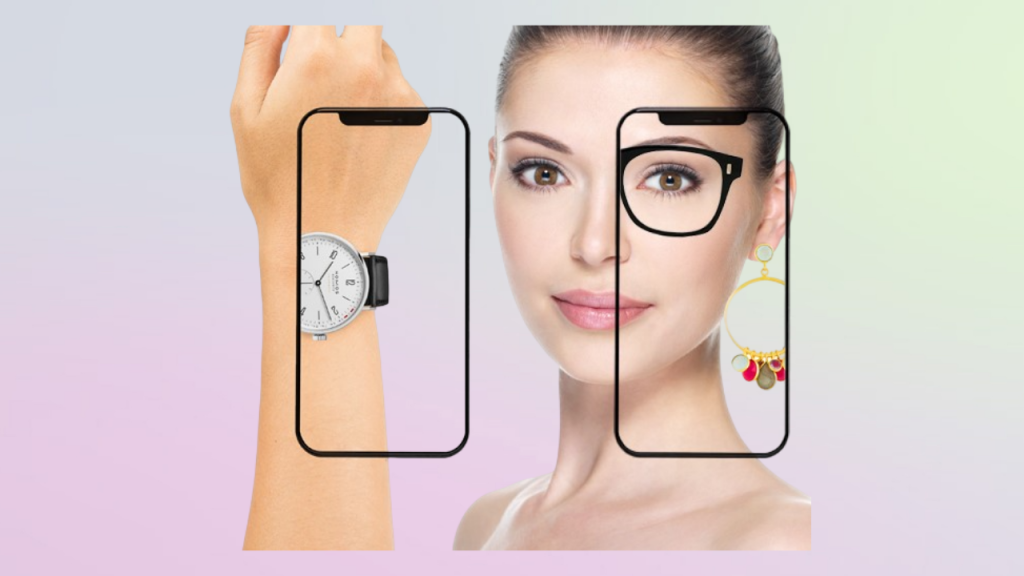
In the world of e-commerce, integrating Augmented Reality into your platform can provide numerous benefits, and this is especially true for businesses selling items that suggest the need for try-on, like jewelry. In this article, we will explore how augmented reality can make a drastic change in your e-commerce jewelry business and help you set your brand apart from the competition. The State Of Jewelry eCommerce In 2024 From the day the first online store opened, e-commerce has gone a long way to boost customer experience. While some product categories have a better time selling on the web, others require additional efforts to look as appealing to the customer’s eye. Jewelry is one of such categories: although the total share of online purchases keeps growing, studies predict that only 25% of jewelry shopping will be done online in 2024. Selling jewelry online comes with a number of challenges. The biggest turn-off for shoppers is not being able to try out items before buying them. This challenge is especially relevant for jewelry compared to other products: firstly, customers have a hard time visualizing how these items will look on them, secondly, they may worry about getting the size right. As a result, they might hesitate to make a purchase. If your business shares similar struggles, augmented reality jewelry may be just the solution for you. What Is Augmented Reality Jewelry Augmented reality offers a complex sales boosting solution for eCommerce entrepreneurs. The AR technology allows your customers to visualize products with the help of their smartphone camera. Depending on your needs and capabilities, users can try on jewelry directly on your website or e-commerce platform, as well as in your store’s app. Users start by giving your online store permission to access their camera. After their face, hand, or display surface gets in the frame, an augmented reality overlay is applied. Thanks to the phone’s proximity sensors and the software’s advanced mechanics, the AR jewelry appears to look identical to the real item, with its size matching the actual size no matter how far away from the camera. The colors, the weight, and the physics of a piece are transferred impeccably into the virtual realm – this is what makes augmented reality jewelry look so realistic. Today’s market offers a variety of software development solutions to cater to every eCommerce entrepreneur’s needs and capabilities. Virtual try-on can be implemented as an in-app feature, website widget, or even as a plugin for your store on global e-commerce platforms, e.g. Shopify or WooCommerce. While each of these options have their pros and cons, online store owners are sure to find the one that suits them most. Use Cases Of Augmented Reality Jewelry AR capabilities expand beyond just try-on features. With today’s technology, it is possible to showcase your products in the virtual realm, provide a 360-degree preview, or even create engaging user experiences for promotion. Let’s take a closer look at some ways to implement augmented reality into your jewelry business. Virtual try-on This is probably the most common use case. Virtual try-on is becoming a must-have for online stores that want to maintain a competitive edge. Adding a virtual try-on solution to your jewelry store can help you boost sales, decrease return rates, strengthen customer retention, and craft memorable user experiences. One of the biggest obstacles on the way of online shoppers is the inability to try items on – this leads to doubts regarding both the size and the general look of the products. Augmented reality jewelry try-on resolves the doubts of your customers by allowing them to try out exact digital copies of your products. The ready-made software solution for virtual try-on jewelry by Banuba and Zakeke is tailored for both apps and websites. 3D Virtual Try-On SDK enables you to give your users an immersive online experience with anatomically accurate jewelry placement, realistic gravity, and lighting adaptation. Banuba’s state-of-the-art face-tracking algorithms detect face as a whole, as well as separate facial features, ensuring a smooth overlay and precise positioning. Presentation Opportunities Unlike the traditional process where designers have a limited approach for promoting their hard work, now with the help of AR applications, they can access bigger audiences and receive more recognition. Jewelry designers can scan and upload their projects, and the whole world can try and praise the new jewelry pieces using the dedicated AR apps. This is when both AR try-on and 3D preview software will come in useful. Market leading companies like Banuba, Zakeke’s Partner, offer AR solutions that enable top-quality product and design demonstrations. This cutting-edge technology enhances product visibility, fostering greater engagement and appreciation from a diverse audience. Marketing Campaigns And Unique User Experiences Nothing helps a brand stick in the memory of its customers like a unique, emotional user experience. While augmented reality is still not quite common to day-to-day experiences, it serves as a perfect tool for user engagement and brand promotion. The exact applications are only limited by your imagination. For example, virtual jewelry can be combined with AR face filters and masks resulting in an entertaining webcam-based experience. Or an element of gamification can be introduced – this is a proven way to drive user engagement and increase time spent in your store. One of the memorable AR-enabled marketing campaigns of the last year was #InMyTabby by the US-based luxury fashion and handbag manufacturer Coach. The brand placed AR mirrors in front of its flagship store in SoHo so that passers-by and store visitors could try on the iconic Tabby bag as a 3D model and take creative selfies with it. The campaign did not go unnoticed – #InMyTabby received substantial media coverage and helped the brand increase in-store traffic by almost 50%. Can you outdo the luxury brand in this promotional success? Why Get Augmented Reality Jewelry Try On For Your Store The main benefit of AR jewelry solutions is that they offer a customer-centric approach, allowing your shop visitors to preview and try on your products in