

FREE LOOKBOOK

How 10 E‑Commerce Brands Use Personalization to Stand Out

3D Configuration

how to reduce ecommerce product returns
3D Configuration

The Ultimate Guide to Minimizing Ecommerce Product Returns

In the ever-expanding realm of e-commerce, the dreaded wave of product returns is an inevitable challenge for online retailers. High return rates can significantly impact profitability and customer satisfaction. In this comprehensive guide, we’ll delve into the root causes of high return rates, explore interactive experiences to reduce e-commerce product returns, and uncover the game-changer: Augmented Reality (AR) experiences. Additionally, we’ll discuss the benefits of embracing live product customization and address common concerns. Let’s embark on the journey to minimize ecommerce product returns and enhance the overall shopping experience. The Root Causes of High Ecommerce Product Return Rates 1. Misleading Product Descriptions and Visuals One of the primary reasons for high return rates is the disparity between what customers expect based on product descriptions and visuals and what they receive. To tackle this issue, e-commerce businesses must invest time and resources in creating accurate and detailed product descriptions. High-quality images and detailed specifications can bridge the gap between expectation and reality, reducing the likelihood of ecommerce product returns. 2. The Disconnect Between Expectation and Reality The virtual nature of online shopping poses a unique challenge – customers cannot physically touch or feel the products they are interested in. This lack of tangible experience often leads to a disconnect between what customers envision and what the product delivers. Addressing this challenge involves leveraging technology to create more immersive and realistic online shopping experiences. 3. The Challenge of Online Shopping: Can’t Touch, Can’t Feel The inability to physically interact with products is a fundamental drawback of online shopping. Customers may hesitate to make a purchase when they cannot assess the texture, size, or quality of an item. To overcome this challenge, e-commerce businesses must focus on providing alternative ways for customers to engage with products before making a purchase decision. Interactive Experiences to Reduce Returns Providing a captivating and informative online shopping experience is key to minimizing returns. Interactive elements, including videos, 3D previews and models, and other engaging features, play a pivotal role in achieving this goal. Here’s a closer look at how these interactive experiences contribute to reducing returns and enhancing the overall customer journey: 1. Dynamic Product Videos Videos offer a dynamic way to showcase products, providing customers with a closer look at their features, functionality, and real-world applications. By incorporating product videos, e-commerce businesses can offer a more comprehensive understanding of their offerings, reducing the likelihood of returns due to misunderstandings about product capabilities or appearances. 2. 3D Models 3D models bring products to life in a way that static images cannot. Customers can interact with 3D representations, rotating and zooming in to examine details from various angles. This immersive experience helps bridge the gap between online and in-store shopping, allowing customers to virtually explore products. The deeper understanding gained through 3D models contributes to more confident purchasing decisions and, consequently, a decrease in ecommerce product returns. 3. Virtual Try-Ons Virtual try-on features allow customers to visualize how products will look on them or fit into their spaces. This is particularly valuable in industries like fashion and home decor. By enabling customers to virtually “try” products, businesses reduce returns associated with size, style, or compatibility issues, as customers gain a better sense of how the product aligns with their preferences. 4. Real-Time Product Demos Real-time product demonstrations, whether through live streaming or interactive sessions, offer customers an authentic look at the product in action. This transparency helps manage expectations, ensuring that customers have a clear understanding of the product’s features and functionality. The Game-Changer: Augmented Reality Experiences Augmented Reality (AR) is revolutionizing the e-commerce landscape, emerging as a game-changer that not only enhances customer engagement but also serves as a powerful tool in reducing ecommerce product returns. So, how does AR transform the online shopping experience, offering a win-win solution for both consumers and e-commerce businesses? 1. Visualizing Products in Real Environments AR allows customers to virtually place products in their own living spaces through the lens of their smartphones or tablets. This capability goes beyond traditional images, providing a realistic and immersive preview of how a product fits into their daily lives. AR minimizes uncertainties and reduces the likelihood of returns stemming from discrepancies between customer expectations and the delivered product. 2. Virtual Try-Ons for Fashion and Accessories AR-driven virtual try-ons enable customers to virtually “try on” clothing, accessories, and even cosmetics before making a purchase. This feature revolutionizes the online fashion shopping experience, addressing common return issues related to sizing and style preferences. With AR, customers gain confidence in their choices, resulting in a more accurate representation of the product and, consequently, fewer returns. 3. Enhancing Interactivity and Engagement AR transforms the passive act of online shopping into an interactive and engaging experience. Customers can interact with 3D models, explore product features, and visualize details up close. This heightened interactivity captures and sustains the customer’s attention, leading to increased engagement. The more engaged customers are, the more informed their purchasing decisions become, subsequently reducing the likelihood of returns driven by dissatisfaction or unmet expectations. 4. Overcoming the Limitations of Online Shopping The challenge of online shopping lies in the inability to physically touch or feel a product. AR effectively overcomes this limitation by providing a more sensory-rich experience. Customers can virtually inspect textures, colors, and dimensions, making the online shopping journey more akin to an in-store experience. This tangible preview diminishes uncertainties, empowering customers to make confident purchase decisions and, in turn, decreasing return rates. 5. Confidence-Boosting Pre-Purchase Experience AR transforms the pre-purchase experience by instilling confidence in customers before they commit to a purchase. By virtually experiencing a product in their own environment or trying it on virtually, customers can make more informed decisions. This proactive approach reduces the need for returns, as customers have a clearer understanding of what to expect when their chosen product arrives. Embracing Live Product Customization Live product customization experiences represent a transformative approach in e-commerce, providing customers with a personalized and engaging shopping journey. By allowing customers to


Read More >
cpq software for manufacturing
3D Configuration

Revolutionizing Manufacturing Sales: the power of CPQ software for Manufacturing

CPQ software (Configure, Price, Quote) is a powerful tool used by manufacturers to create accurate quotes quickly. It helps streamline the quoting process and reduce errors. The product configurator examples allow customers to customize their products based on specific needs and requirements. So what is CPQ software for manufacturing? The best product configurator tools and product configurator software for CPQ allow companies to generate accurate quotes for their customers while saving time and money doing so. What is CPQ software? CPQ software is a specialized sales tool that streamlines the quoting process for sales teams. It helps companies create accurate, compliant quotes by automating the end-to-end sales process and enables users to configure complex products and services with precision.  This use of automation also helps reduce errors in pricing and terms quotes, ensuring that all components are compliant with company policies.  The key features of CPQ software include: Integrating CPQ software for manufacturing with existing ERP systems can help streamline business processes even further by enabling data sharing between departments such as Sales, Accounting, and Shipping & Receiving. This allows for greater visibility into overall operations. This integration also ensures accurate data transfer from one system to another which eliminates manual entry errors and reduces time spent on administrative tasks such as creating invoices or tracking orders in multiple systems. By leveraging these features of CPQ Software companies can improve their quoting efficiency resulting in shorter sales cycles and increased revenue opportunities. CPQ for Manufacturing: Configure, Price, Quote At its core, this software provides an intuitive interface that allows users to configure detailed CPQ products with multiple options and pricing structures. It also offers features (such as guided selling tools) to provide helpful recommendations based on customer preferences and feedback.  CPQ software also provides built-in analytics capabilities so businesses can better understand their sales data. This includes insights into customer buying patterns as well as what types of products are most popular or profitable. With this information, companies can make informed decisions about pricing strategies or product features that will help them maximize profits while staying competitive in the market.  Finally, CPQ software is designed to integrate seamlessly with existing business systems such as CRM platforms or ERP systems so all sales data is stored in one place and accessible from anywhere at any time.  By leveraging the power of CPQ technology businesses can reduce costs while increasing productivity and efficiency across their entire organization. Benefits of CPQ software for Manufacturers CPQ software is an invaluable tool for manufacturing businesses. It can streamline the entire sales process from initial customer contact to product delivery.  Here are some key benefits of CPQ software for manufacturers:  By automating the configuration and pricing of complex products, CPQ software eliminates the need for manual calculations which can often be time-consuming and prone to mistakes. It can be integrated with other systems such as ERP and CRM solutions to provide real-time pricing information which further reduces the likelihood of errors.  CPQ software enables manufacturers to quickly respond to customer requests with accurate quotes. This helps build trust with customers by demonstrating a commitment to meeting their needs promptly. CPQ software can help improve margins on sales by providing detailed cost breakdowns that allow manufacturers to adjust prices accordingly. This ensures they can maximize profits while still providing competitive pricing that meets customer demand.  CPQ software provides insights into customer buying behavior which allows manufacturers to make informed decisions about future product offerings and promotions.  How to choose the right Manufacturing CPQ Software? When selecting the right manufacturing CPQ software, scalability, and customization options are key considerations. It is important to select a solution that can grow with your organization, so you don’t have to start from scratch when expanding or changing your product line.  The ideal manufacturing CPQ software should also be highly customizable, allowing you to tailor the system to meet your specific needs and preferences.  Integration Capabilities  Look for a solution that easily integrates with existing systems and applications within your organization, such as ERP or CRM systems. This will save time and money by avoiding manual data entry and ensuring accuracy across all departments.  User-Friendliness A user-friendly interface makes it easier for employees to quickly access the data they need without having to be trained in complex processes or commands. Additionally, look for a solution that offers comprehensive training resources so employees can learn how to use the system effectively and efficiently.  Pricing and ROI Analysis  Be sure to compare features, costs, and potential return on investment before making a decision. By doing this analysis upfront, you can ensure that you get the most value out of your investment in manufacturing CPQ software! Visual CPQ for Product Configuration: Zakeke Here at Zakeke, we’re designing state-of-the-art product configuration tools. Through the use of powerful, visual CPQ software, your team can manage requests and complex projects for configured products, ensuring both efficiency and accuracy.  Our Product Configuration tool allows you to manage complex design rules and integrates a visual CPQ software to receive requests from even the most demanding clients. Try us free today or book a demo to learn more!

Read More >
3D Car customization
3D Configuration

3D Car Customization: The Ultimate Trend For Car Market

The practice of car customization is not new. However, the car industry has seen a dramatic increase in car upgrades and other customizations over time. People want to increase their car’s performance, give it a new and more unique paint job, accessorize their vehicles, and jazz up the interior (including the sound systems).  But, when they go to a traditional car dealership, they’re stuck picking from what’s available, and they must invest in these vehicle customization options later on – which can deter them from buying what they may really want. This is where Product Customization comes into the picture. What do we mean by product customization? Simply the process that lets customers create their dream products, even unique cars! What can be customized? Colors, routes, design, accessories… anything! In some ways, you can think of an online 3D Car Customizer interface as the character creation step for a modern video game that allows you to pick your character’s appearance. Now that this customization technology exists, people can create their dream cars in a real-world build-your-own-car game. So do we really expect them to pass up this opportunity? Understanding 3D Car Customization People have been customizing cars since the beginning of the automotive industry. The first cars were not mass-produced like today – every car was customized (and incredibly expensive). Wealthy individuals would hire someone to customize the vehicle to match their lifestyle better.  As companies began mass-producing models of cars, the overall price of these vehicles decreased, but so did the customizations. As a result, many car companies began offering “car customizing” options to incentivize customers to buy their models. These allow customers to modify certain parts of the car or add accessories. Today, car customization is more popular than ever. While the concept of customizing a car is the same as always, the way you can customize a car today is quite different. Using modern technology, you can customize your vehicle online without even talking to a dealer.  You can search “3D car customization software online” and find several options to build and customize your dream car. This allows customers to create what they want much quicker, which is becoming an expectation with the rise of e-commerce and 3D visualization technology. All The Benefits Of 3D Car Customization So, what are the benefits of offering your customers a 3D Car Customization tool? Let’s explore together: The Process Of 3D Car Customization Now that you know what are the benefits of 3D configuration for vehicles, you may wonder how 3D Car Customization Apps work. Thankfully, getting a car customized today with virtual designing and 3D printing technology is quite simple. In the simplest overview, the process for car customization is as follows: In other words, as many car companies have the machines already in place to automate the actual part creation and assembly process, all you need to do to get a customized car is design it using their 3D car customization options, and then the machines take care of the actual creation of the vehicle. Examples Of 3D Car Customization A 3D Car Configurator allows customers to experiment with different colors, features, accessories, and more without buying them. Offering mass customization options in a 3D car game-like interface allows them to zero in on their design aesthetic and find out what they want in a vehicle.  For example, they may opt for some relatively under-the-radar customization options to their car’s interior, or they may want a standout vehicle like Chris Brown’s eye-catching color-changing Lamborghini or Flo-Rida’s gold chrome Bugatti. Generally, if you’re wondering about the best cars to customize, it’s worth noting that every car can be customized, not just the most expensive ones. With the right 3D Car Configurator, you just need to set the customization rules by choosing the options you want to allow your clients to select. This way, it becomes easy to make the car customizable and to produce it according to the customer’s choices. The Future of The Automotive Market The future of the automotive market is being reshaped by advancements in Augmented Reality and 3D printing technology, signaling a shift towards comprehensive vehicle personalization. These innovations promise to revolutionize customer experiences in car dealerships, offering 3D car customization interfaces that provide an immersive, detail-rich preview of their future car. From body kits to interior ambiance, the extent of customization is boundless, allowing customers to craft their dream vehicles with precision. This shift, however, transcends the automotive industry. It’s part of a larger movement towards bespoke products across various sectors, highlighting a future where personalization is central to consumer satisfaction. The fusion of AR, 3D, and customization is not just transforming car design; it’s redefining market consumerism. In this emerging era, the power of choice and individual expression is paramount, positioning customization as a fundamental component of the modern consumer journey. The future, it seems, belongs to those who can offer a truly personalized experience, making customization the cornerstone of competitive advantage and customer loyalty. 3D Car Customization: Make it Simple and Affordable with Zakeke The point of a 3D car model maker online interface is to allow your customers to play around with designing a vehicle without feeling trapped in whatever they have selected.  They can make the whole car pink, like Paris Hilton’s iconic pink Bentley Continental GT. Maybe they want their car to look like the Iron Man suit. Product Customization and Configuration software allows customers to play around with these fun ideas and figure out what shows their personality. If you want to give your customers an engaging experience, Zakeke’s 3D Product Configurator software can help you. Zakeke’s no-code software is easy to use for you and your customers and integrates seamlessly with all major e-commerce and website platforms. Imagine your customers selecting the color, the components, the material of the seats, and the shape of the gear shift of the cars you sell… intriguing, right? And all online, viewing the changes to the car in real-time to

Read More >
AR jewellery ecommerce
3D Configuration

AR jewellery: the future of jewellery design

The jewellery industry is big business in the entire world, for example, according to a recent Statista Research, jewellery industry brings in 1.41 billion GBP in revenue in the UK. AR jewellery try-on technology is one way brands can coax back customers ready to shop again after the pandemic.  Also known as “virtual try-on software”, “digital try-on tech”, “virtual dressing rooms”, etc., Augmented Reality (AR) let shoppers “virtually” try out jewellery, apparel, eyewear, even furniture and more, using an interactive App. Let’s talk more about the use of AR in the jewellery industry, how it works, and a few of its many uses and benefits in the world of ecommerce.  How Augmented Reality is changing the retail industry More and more retailers are adding AR technology to their online experience to help consumers with the buying process and increase customer engagement.  A Snapchat and Deloitte report reveals AR use in various industries, including ecommerce, is tracking similar in scale to the mobile phone explosion of the mid-2000s. A recent Google Consumer AR Survey found 66% of all shoppers were interested in trying AR in ecommerce.  The use of AR in retail, especially for virtual jewellery try-ons, gives shoppers the power to interact with digital content via an App as if the item(s) was in their own home or office. One easy way to understand AR try-ons is to compare it to a social media filter used to personalise a user’s real-time image.  How does Virtual Try-On AR jewellery work? Augmented Reality combines different technologies including AI face detection, tracking, cameras, and more so users can see how an item will look in real life.  This interactive Augmented Reality technology generally works by: Different ways to use AR in the jewellery industry High-end luxury items, like jewellery, that have been a harder sell in the past online will see an increase in ecommerce revenue with more use of AR and VR technology by manufacturers.  One way this increase is expected to occur is through more sales of custom products. AR is an especially valuable tool that ecommerce stores can use to highlight customization options to customers.  AR in jewellery ecommerce stores offers boundless possibilities, but there are two most popular use cases: product configuration and Virtual Try-On. Jewellery customization and configuration with AR Product configuration for jewellery is how ecommerce offers large-scale customization to shoppers. Product configuration, leaning heavily on modern modularization tools, lets ecommerce meet specific customer needs.  Many online tools are integrated into online stores, giving shoppers a range of customization options. Jewellery customers can personalize everything from colour, jewellery type or style, finish, and gemstones. Add custom names or monograms, and more. Meanwhile, AR try-ons camera-enabled devices into virtual showrooms so users can see their customizations in 3D. Shoppers create designs — mixing and matching different elements — then view the result using an AR try-on before hitting “buy.”  Virtual Try-On jewellery using AR Shoppers spend 10,719m GBP on jewellery and watch in the UK alone. An expected increased use of AR try-on jewellery software should drive sales even higher as these apps give a full Shopping Experience to users.   AI and machine learning verifies object or person seen in the device’s camera. Then, the app overlays the jewellery image selected. Next, AI tracking and other tools are implemented so orientation, placement, and size adjust as needed. If the person moves the object (jewellery) moves also, as if in the same space. Let’s see an example: if shoppers want to see how a ring or bracelet will look on them, they can activate AR view, and see the ring in AR and 3D. The App device’s camera is activated, allowing the app to overlay imagery of the ring or bracelet onto a real-time camera feed of their hand/arm.  You’ve likely already seen AR try-on at many retailers, such as Tiffany and Co which used virtual jewellery try-ons for ecommerce and social media. Benefits of using AR for jewellery businesses Augmented Reality can help jewellery ecommerce stores in many ways: According to Bain and Co, luxury sales to Gen Z and Gen Alpha will grow 3x faster than other generations from now until 2030. These generations are also more likely to adopt AR and all the last technologies on the market. Consumers want more choices. AR try-on apps are more efficient. They’re a timesaver, giving shoppers across all demographics more shopping options. The use of AR also improves social selling as Apps are used by customers to share looks, and get advice from friends as they shop online.  One challenge for ecommerce is meeting consumers’ desire to try-on jewellery items before purchase. Virtual try-ons fulfil this need. Also, shoppers using virtual try-ons are less likely to return items since AR helps them better visualize the jewellery item.   According to Shopify, merchants with 3D & AR content including virtual try-ons saw an increase in conversion rates by 94% on average. Also, since it’s easier for customers to shop on websites with AR, higher customer satisfaction is likely. AR apps also can be outfitted with AI modules gathering data to provide useful shopper insights.  How to get started with AR jewellery You can start providing your customer with the possibility to customize and see in 3D & AR your jewellery items simply by choosing the right tool: Zakeke.  The time will never be better to start using Zakeke’s powerful 3D Configuration and AR tools to bring a more immersive Shopping Experience to your customers. Use AR to provide immersive, interactive visuals that will bring your products to life and increase consumer confidence in your jewellery brand.  Zakeke is an all-in-one Visual Commerce platform that can increase your sales and conversion rates through the power of 3D Configuration and AR. Easy to set up and implement, Zakeke integrates seamlessly with the most used ecommerce platforms including WooCommerce, Shopify, and more.  So, are you ready to implement powerful Product Configuration and jewellery AR try-on for your ecommerce? Let’s start from now with

Read More >
Best Shopify Configurator
3D Configuration

Top 7 Best Shopify Product Configurator Apps: 2024 Ultimate Guide

Immersive experiences and customization are the two main trends driving modern e-commerce: product pages with 3D models and AR technology generate a +250% conversion rate and by 2026 over 60% of consumers will require a 3D shopping experience. For this reason, eCommerce businesses have to consider introducing solutions that can build a unique and interactive shopping experience, which can best present their products. This is where tools like eCommerce Product Configurators come in! Product Configuration for e-commerce provides many benefits, allowing customers to customize and configure products according to their needs and preferences, improving product visualization and increasing customer engagement and satisfaction. Now the most common question: how to implement product configuration in your store? Is it expensive? No, there is a very simple way! If you manage a Shopify store, you’re in the right place! Let’s discover together what are the best product configurations for Shopify and how to choose the best one. What Is A Product Configurator? Regarding product configuration in e-commerce, refers to the process that allows customers to create made-to-order products. That’s right, the customer can customize their products by choosing material, design, features, and much more. Why integrate a 3D configurator software? What are the benefits of 3D Configuration? Difference Between Product Configurators & Customizers When we talk about Shopify Customizer & Shopify 3D Configurator, what is the difference? When we talk about product customization, we generally refer to visual customization. The possibility to add texts, images, change colors. The world of configuration includes an additional step: configuring products means also choosing materials, components, and finishings, creating 360° made-to-order products. Depending on the type of business in question, one can opt for a Visual Product Customizer or a 3D Configurator, considering which tool is the best to achieve their business goals. How To Choose The Best Shopify Product Configurator? Before getting into detail about the best Shopify Product Configurators, let’s talk about the main factors to consider during selection: Top 3D Shopify Configurators in 2024: Selection Guide Here is a comprehensive guide to the best Shopify Product Configurator. We recommend reading it to the end to choose the one that best suits your store’s needs: #1. Zakeke Shopify Rating: 4,6 Securing the leading position among Shopify Configurators… Zakeke! And it’s not just because this is our blog. Zakeke goes beyond being a mere Configurator: it’s a comprehensive Visual Commerce Platform. It offers instant 2D product personalization, sophisticated 3D configuration and visualization, as well as engaging Augmented Reality and Virtual Try-On experiences. Highlights: Pros: Cons: Pricing: Starts at €13/month. There’s a 14-day Free Trial on offer. Get started: Test Zakeke with a 14-day free trial (you can integrate it by yourself into your e-commerce platform) or schedule a demo to explore its full range of functionalities. #2. Angle 3D Shopify Rating: 5 Angle 3D is an exclusively Shopify-based 3D Product Configurator. It allows businesses to design and configure their products using an intuitive and easy-to-use interface. Angle 3D allows you to choose a product and make it fully customized. Thanks to its advanced 3D graphics engine and 3D modeling features, Angle 3D offers a highly real-time product visualization, allowing customers to see exactly how they will receive the product at home. Angle 3D is a 3D configurator, but it isn’t a Visual Product Customization software, so it may not be suitable for printing industries seeking customization and doesn’t offer a Virtual Try-On for made-to-order products. Highlights: Pricing: Starts at $39/month. 14-day Free Trial avilable. #3. Expivi Expivi is a cloud-based Shopify custom product builder with advanced 3D visualization and configuration features. It offers a wide range of customization options with a user-friendly interface that makes the configuration experience simple and interactive. In addition to 3D configuration, Expivi also offers an external AR product view App, a CPQ tool, and a 3D Viewer. Unlike Angle 3D, Expivi integrates not only with Shopify but also with Magento, WooCommerce, LightSpeed, and SAP (but is not available on marketplaces). Highlights: Pricing: On request. #4. Vectary Vectary is a 3D product Viewer, not really a 3D Product Configurator. It allows businesses to create interactive and highly realistic product models with a user-friendly interface. The tool can create 3D models from scratch or use pre-loaded assets from its library.  Vectary’s advanced visualization features help businesses present products in an engaging and interactive way, increasing conversion rates. It is not suitable for visual product customization. Highlights: Pricing: Free Starter version available with limitations. #5. Threekit Threekit is a cloud-based 3D Product Configurator that provides dynamic product visualization experiences. It offers Visual Photography solution (for visual product customization only) and Augmented Reality.  Threekit provides high-level 3D product rendering with the VRay technique and allows you to create 3D models of products directly within the platform. It integrates with Magento, Shopify, BigCommerce, and Salesforce CPQ but doesn’t offer Plug&Play integrations, so you might find it difficult to install and with a longer onboarding process. Highlights: Pricing: On request. #6. LevAR Shopify Rating: 4,5 LevAR is a Shopify Product Configurator that allows businesses to provide an interactive shopping experience to customers. Customers can configure the product as they wish and preview it using Augmented Reality before purchasing thanks to LevAR’s advanced product visualization and customization features.  The company must request the creation of the 3D model directly from their account and LevAR provides a quote proposal that can be accepted or discussed again. Highlights: Pricing: Starts at $59/month. 14-day Free Trial available. #7. InkyBay Shopify Rating: 4,9 InkyBay is a Shopify personalization app. It has many customization options and works exclusively on Shopify (the dashboard is integrated into the Shopify back-office).  InkyBay is a 2D customizer and the configurator is part of advanced settings, so all configuration options and attributes are managed in 2D. The interface is customizable (even through CSS) and rich in graphics features for the printing industry, but InkyBay does not integrate with POD services or Dropshipping services or even Marketplaces. Highlights: Pricing: Starts at $19,99/month. 21-day Free Trial available.  

Read More >
Product Visualization ecommerce
3D Configuration

How a better Product Visualization can improve Customer Experience

Even though the stay-at-home orders and mandatory nationwide isolation have subsided, many of the habits and practices that society adopted during the height of the COVID-19 pandemic have shown every sign of sticking around. One example of this is the increased popularization of online shopping and e-commerce.  While there are people who are happy to be able to go back to a store to buy their groceries or other essentials, there is a large group of people who are still all-in on the convenience of having their products delivered right to their doors.  Because of this, many businesses are finding themselves needing to constantly adopt new technologies and techniques that make their online websites easier to navigate and more engaging for their customers. This is where the importance of product visualization comes in. The importance of improving Customer Experience Think about it this way, if your business’s previous selling point was that it was the local retailer and it was easy and convenient for our customers to get to, find their items, and go home, shopping at home has taken away this selling point for your business. Now consumers can shop from anywhere and have things delivered to them.  So, how are you going to get them to shop with you rather than your competitors online? Simple. Focus on your customers themselves. Work on creating a more unique and memorable customer experience. This will separate you from your competitors and increase the likelihood of maintaining your customer loyalty. But how can you do this? In a brick-and-mortar store, customers are able to inspect products from multiple angles and make more informed decisions about whether or not they want to make a purchase. This can be difficult to do online — especially if all a customer has to use are a few static pictures and – maybe – a size guide. One incredibly useful tool that you can use is to offer more detailed product visualization options for your products.  The importance of Product Visualization While artistically photographed 2-dimensional images of your products may be a good way to initially grab the attention of a customer, if this is the only visualization you are offering, your customer may be filled with more questions than answers. This can leave them hesitant to actually make a purchase — which is not the goal. So, how can you improve your customers’ confidence in your product and in their purchasing decisions? Offering a 3D visualization of an object where customers can easily view, zoom in, rotate, and otherwise interact with the object in a more meaningful way can be an incredible boost to the customer experience and allow your customers to feel much more comfortable making a purchase. Humans interact with the world in 3-dimensions, so by offering 3D and non-static views of your products, your customers will be able to more intuitively understand what they are and what they are going to actually look like when they get them delivered. A platform like Zakeke can help you to create this fully customized and engaging product experience that allows your customers to easily interact with and inspect your products more like they would be able to do in a traditional brick-and-mortar store (only better because they can do it from the comfort of their own homes). Zakeke software can easily integrate into your existing workflows, and it works seamlessly with popular e-commerce platforms — like Shopify and WooCommerce. What are the benefits of 3D Product Visualization? There are a number of benefits of 3D product visualization that your business can use to ultimately increase your sales and customer retention: For this reason, many businesses are finding that 3D visualization companies, like Zakeke, can be an essential tool moving forward in the continually competitive online marketplace. How to do 3D Product Rendering The word “rendering” comes from art. In the art world, a painter would “render” a face (or another painting subject) which means filling in the details that make the 2-dimensional painting look like a real face — this would be adding shadows, highlights, and otherwise making the face look like a face and not just a series of skin-toned blobs on a canvas. In software, the process is quite similar to the art process. You take the basic model of your product (3-dimensional model), and you start bringing in those details that make the image look less like a series of points and flat surfaces and more like whatever product you are offering your customers.  Oftentimes, without going through the rendering process, your customer may not know what to make of a 3D model, so not only does rendering make a product visualization more appealing to your customers (thus increasing their desire to purchase it), it can also be essential to making your product visualization understandable. Not only visualization: benefits of 3D Product Configurator What is a 3D product configurator, and what does this type of technology do for your business? Some of the benefits of 3D product visualization for e-commerce stated above require the use of a 3D product configurator to work. Namely, any type of e-commerce customization options that you want to offer your customers will require the use of one of these configurator tools.  This is because a 3D product configurator is a piece of interactive software that allows you to customize a product — based on the available configuration (or customization) options — online. In other words, if you are selling home goods and you have a kitchen cabinet that can come in different types of wood, different finishes, and maybe even have different numbers of shelves or drawers, you could use a 3D product configurator to allow your customer to create the cabinet exactly as they want it to look. This product configurator will also allow your customers to be able to see the product from all angles, zoom in, and view details. This can help them feel much more confident about their purchase and lead to fewer

Read More >
AR in fashion e-commerce
3D Configuration

A New Era of Digital Reality: From 3D to AR and Beyond

In this post, we’ll delve into the crux of 3D Visualization and explain how it impacts consumer behavior. We’ll also examine how AR and 3D Visualization are redefining retail and what the future holds for these technologies.  The world is changing, and the way customers experience products has also changed. As consumers demand more customization and yearn for more personalized products, forward-thinking companies are leveraging visualization tech to achieve a competitive edge.  Technologies like 3D visualization and augmented reality (AR) have opened up a new realm of possibilities, improving customer experience and saving costs in the long run. And companies adopting these technologies are seeing a quantum leap in revenue and sales.  For instance, recent research has found that augmented reality boosts online shopping sales by up to 200%. That’s because the modern consumer, particularly millennials and Gen Z’ers, prefer shopping on sites that replace physical interactions with more engaging virtual experiences. And this is where 3D visualization comes in. So, what is 3D visualization? What is 3D Visualization? The goal of 3D visualization is to provide a digital representation of what the object would look like in the real world. A good example is companies that use try-on technology, like Guerlain. When shopping at their store, you can see realistic 3D imagery of the product you want to buy without visiting a physical store.  2D and 3D Visualization: What’s the Difference? Online retailers focus heavily on putting their products in front of the customers.  However, online shopping suffers a major drawback; it can be difficult to determine whether the product will meet the client’s expectations by viewing the product images. And this is where 2D and 3D visualization comes into play.  In contrast, 3D Visualization allows shoppers to view product visuals from every angle and see how each part would look. Customers can interact with the product to see every detail. They can spin it, turn it, zoom in, zoom out, and do more.  What are the Advantages of 3D and AR Visualization? The use of AR and 3D product visualization in e-commerce greatly impacts the customer shopping experience. Here are a few advantages of using 3D and AR in e-commerce. 1. It Increases the Confidence of Shoppers Trust is the foundation of the brand-customer relationship. But how do you build trust with your customers? 56% of consumers say that additional product information inspires them to trust a brand more and make a more informed purchase decision.  In an age where consumers first research a product online before committing to buy, 3D visualization and augmented reality can help them make more informed decisions. These technologies make them envision how a product would look and feel in their home, encouraging them to buy.  2. Increase Your Conversion Rates The longer the customers stay on your website and explore your products, the more likely they’ll make a purchase.  With a photorealistic 3D model integrated into your site, your customers can truly experience your products virtually, accelerating their conversion journey. Research shows that interacting with AR can boost your conversion rates by up to 94% as shoppers feel more connected to your brand.  3. Reduce the Product Returns As the move to online shopping intensifies, high return rates are one of the biggest problems faced by online retailers. Research conducted by Mintel, a market research company, found that 49% of online shoppers had returned products bought in the previous year.  Addressing the question of why consumers return the goods, UPS surveyed 18,000 global online shoppers. Among the top reasons were faulty or damaged products (30%), followed closely by goods not matching the description at 27%.  The product return problem can easily be solved with the use of AR and 3D visualization. AR, for instance, offers virtual try-on and product demos, providing shoppers with an opportunity to try before they buy. As a result, customers can make more informed buying decisions, reducing the high customer return rates.  Redefining Retail: How Is 3D Closing the Loop? The impact of 3D renderings is being felt in virtually all industries, and the retail sector is no exception. As Allan Cook, the MD at Deloitte Consulting, puts it, “The massive shift to 3D will completely transform retail and change how people shop.” 3D technology is already making waves in retail. Savvy businesses are using 3D visualization to improve customer experience and drive sales.  3D assets can also be used to create different forms of content—from key visuals to social content, CGI product shots, product customizations, etc. Investing in quality 3D designs and technology can also save your business money.  For instance, using CGIs in your catalog can remove the need for expensive photoshoots while allowing the users to view true-to-scale imagery in their homes.  The Future of 3D and AR Visualization: A Huge Global Market As more companies realize the benefits of using 3D visualization and AR in their platforms, the 3D rendering market continues to grow.  The 3D visualization market exceeded $2 billion in 2019 and is projected to grow at an over 20% CAGR up to 2026.  The advancement in 3D modeling and emerging augmented reality/virtual reality technologies are driving the demand for efficient 3D visualization solutions. The future of 3D will take design work to a new level of quality and speed.  3D visualization coupled with augmented reality has led to the development of what tech nerds call “product display 2.0.” Taking furniture in retail as an example, 3D Visualization and AR help customers envision the products as if they have already bought them and placed them in their apartment. Only physical stores were able to offer this kind of experience a few years ago.  Companies like Flex Arcade have already implemented AR into their e-commerce platform. The company enables shoppers to visualize their arcades while configure them in 3D and AR. Customers can choose to bring more changes to the design or complete a purchase.  By enabling a 3D product configurator, online shops can simulate the unique feeling of a product—virtually from

Read More >
Product configuration ecommerce
3D Configuration

How Product Configurations Affect Customer Satisfaction & Purchase Intention

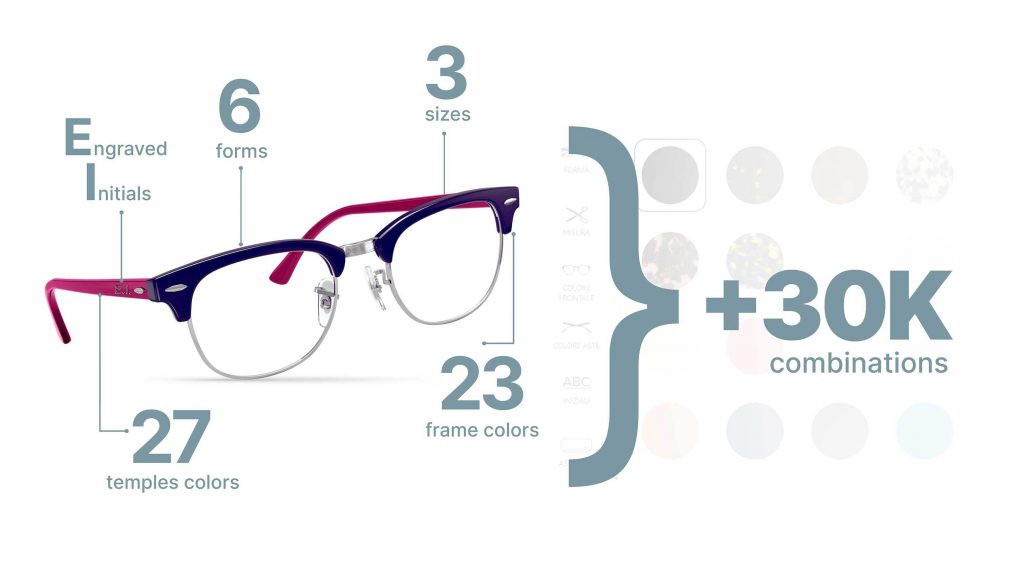
According to Econsultancy, customers want to see the product, feel it, establish an emotional connection, and eliminate doubts before purchasing.  And that’s where 3D product configuration comes in.  In this comprehensive guide, we’ll introduce you to 3D product configuration and explain how it’s changing the face of e-commerce. Let’s dive in!  What Is a Product Configurator? In e-commerce, a product configurator is an interactive software that lets online users customize a product based on certain available configuration options and characteristics, such as size, color, texture, and more.  In other words, a product configurator visualizes the product based on the customer’s real-time configurations to help them have an accurate image of their desired product. What Is 3D Product Configuration? Have you ever visited an e-commerce website that allowed you to customize a product—changing its size, color, finish, and other factors to suit your taste?  That’s a 3D product configurator in action.  If you haven’t yet, chances are you’ll encounter one soon, as this e-commerce trend is gaining traction by the day. 3D configuration allows users to customize the appearance of a product at will. All you need is a few taps, and the product will behave accordingly.  How does this help shoppers? 3D product configuration allows consumers to view the product from different sides and angles, assess every aspect of the product in detail without leaving their couch, and finally choose a product that perfectly resonates with their style, taste, and preferences.  This way, product configuration allows customers to see how your product looks, acts and feels. Shoppers can zoom, spin, and rotate the product in a 3D environment, which gives them a personal connection with the product.  The results?  Your customers get a more personalized shopping experience while businesses enjoy more sales and few returns, creating a win-win situation for all.  Why are Companies Increasingly Investing in 3D Product Configurators? As mentioned, product configuration is an e-commerce trend that is here to stay. But why are companies investing in 3D configurators?  These stats reveal it all. Read on to learn how a 3D product configurator works and how it can benefit your business. How Does 3D Configuration Work? 3D configuration is achieved through 3D configurators—software programs that create high-fidelity 3D renderings of the items in your store.  3D configurators integrate seamlessly into your app or website without overloading your system with too much tech. Your 3D configurator usually fulfills two core functions: For example.  A customer may want to buy a hiking show but has no idea what kind of footwear will endure a rough or mountainous terrain. Once they land on your website, they’ll likely check customer testimonials and browse through the various hiking shoes you have on offer.  This will give them an idea of what they want, but the photos will likely not be enough to help them decide on the right hiking show to buy.  And this is where a product configurator comes in.  Your configurator will display the different shoes and inspire them to check out variations of that footwear. The customer can check the shoes inside out from 360 degrees, interact with them, and make an informed buying decision.  They can even customize the product.  Using the configurator, they can check out the shoe sizes, styles, colors, and materials—and even combine them to create a personalized pair that matches their style and needs.  3D Product Configuration Use Cases Forward-thinking companies have been using 3D product configurators to increase customer engagement and satisfaction.  The results? Increased sales, fewer returns, and more loyal customers. Here are some examples of brands that have taken product configuration to the next level with 3D and AR. 1. Wayfair Wayfair is the perfect example of companies reaping big from product customization. The company is seeing around $6 billion in annual revenue, and for a good reason; product visualization.  The company has consistently changed the way consumers shop for furniture. They leverage 3D visuals, 2D content, and cutting-edge augmented reality experiences to provide shoppers with a wealth of product information required to make an informed buying decision.  2. NAU Nau, an Italian online retailer for stylish eyewear, is another brand leveraging product visualization to the core.  The company, with more than 100 stores around the country, thanks to its 3D renderings and Virtual Try-On gives shoppers an excellent and interactive customer experience. The company allows users to “try before they buy” with digital try-on applications and detailed 3D imagery. 3. Armani The Fashion Giant started an ambitious project last year: bringing 3D product configuration online and in-store. Thanks to this techology, Armani is letting customers create their own version of some of the most trendy bags they’re offering around the world. User can customize everything, from the color of the bag, to engraved initials and more. How Product Configurations Can Benefit Your Business Implementing 3D product configurations can benefit your company in many ways.  1. It Improves Customer Satisfaction The obvious benefit you get by implementing product configuration is increased customer satisfaction, which results in more conversions.  One of the biggest drawbacks to shopping online is that you don’t get to experience the product. Not anymore. 3D visualization eliminates the need to visit a brick-and-mortar store, which is expensive and time-consuming. Advancing 3D configurations with AR and VR increases the usability of this tech even further, allowing customers to interact with the product from all angles. This increases customer satisfaction which increases sales.  2. Higher Perception Value A study by Deloitte found that customers are willing to pay more to have products customized to their needs. According to the study, more than a fifth of shoppers are willing to pay up to 20% more for personalized goods.  Product customization highlights their lifestyle and brings out their personality.  3D configurators give shoppers the option to customize products to their needs. With product configurations, companies benefit from increased engagement, which leads to more quality leads, higher conversion rates, and lower customer acquisition costs. It’s like a silver bullet that improves every area

Read More >
configured furniture
3D Configuration

Augmented Reality Furniture: Benefits & Starting Guide for eCommerce

The wise say, “A picture is worth a thousand words.”  But there’s no guarantee that furniture will look good in your living room or that the refrigerator will properly fit in your kitchen. Most online retail marketplaces are built on static images. While these images can be stunning and catchy to the eye, they lack tactile perception – a reality that makes you see and experience a product as if you were physically present. Enter the world of Augmented Reality furniture. 3D and Augmented Reality technologies allow furniture brands to provide their customers with a try-before-you-buy shopping experience with realistic product visualization that drives sales.  The use of Augmented Reality in furniture stores has gained traction over the past few years. A recent study conducted by Centric Digital found that 60% of shoppers want to use augmented reality as part of their furniture shopping experience.  But how can brands drive sales with AR? We’ll delve into the crux of 3D and AR in furniture stores and explain how these technologies can be used to drive engagement and sales. We’ll also walk you through the steps to implementing AR in your furniture store.  The Rise of Augmented Reality (AR) in Online Shopping Augmented reality (AR) is an emerging technology that has truly revolutionized the way we shop, communicate, and even play games. Despite being around since 1968 – when the first AR headset was developed by scientists at Harvard University, AR only gained significant traction with the success of Pokémon Go. The game uses AR to make Pokémon appear anchored to the real-world right in front of you. The onset of COVID-19 further changed the game for AR and VR, as online shopping stole the spotlight. Research shows that global spending on AR and VR headsets grew 50% in 2020 to reach a staggering $12 billion.  Today, customers are less hesitant and widely use augmented reality to facilitate shopping. Used in shopping, AR gives consumers the power to change some elements of their surroundings without changing them.  For instance, AR allows consumers to try out furniture virtually. Shoppers can stage the furniture and experience how it would appear in their rooms. Most importantly, it helps shoppers determine whether the furniture would fit their room or not. In the realm of e-commerce, furniture businesses should harness the power of 3D & AR to distinguish themselves from competitors. How to Drive Online Sales with 3D & Augmented Reality for Furniture Thanks to technologies like AR and 3D rendering, the furniture industry is having its online moment. Here are some stats to enumerate the impact of AR on furniture sales: These stats should give insights into how the application of AI can help boost your furniture sales online. But how exactly are 3D visualization and AR pushing online furniture sales? 1. AR Enables Customers to Virtually “Try” Out Furniture One of the big challenges when buying furniture is trying to visualize what it will look like in your home. While returning a dress that doesn’t fit is a straightforward process, sending back a bulky item, like a furniture set, can present a lot of challenges.  And this is where AR comes in. Leveraging the 3D and AR technologies allows you to bring the in-store experience to online shopping and see furniture in your room from your screen. With 3D modeling, retailers can use interactive, graphical representations of their furniture items. Customers can rotate the object, zoom in or out, and even view it in motion right from their mobile app or browser. This gives them a greater understanding of the features and functionalities of the product while envisioning what it looks like in real life.  In a nutshell, the use of 3D And Augmented Reality furniture allows customers to: With these immersive capabilities, augmented reality and 3D renderings increase the customer satisfaction level, leading to more sales and fewer returns. These technologies also help to eliminate the guesswork out of the furniture shopping experience.  2. Customers Can Determine the Size of Furniture Before Buying Nothing can be more frustrating than buying a piece of furniture, only to realize later that it can’t fit its designated space.  Augmented Reality furniture apps help to avoid this problem by allowing customers to determine the size of the furniture right within their desktop or mobile app. Through AR and 3D rendering, your smartphone becomes your measuring device.  As you start to encode the product in a 3D environment, you also capture the measurements of those products. As such, your phone doubles as a measuring device, allowing you to measure dimensions and only settle with products that are the right fit for your house. 3. AR Imparts that Emotional Experience That Static Images Can’t Provide The number one driving force behind most purchases is emotions.  Connecting emotionally with a product increases your likelihood of buying it. And that’s where AR outshines the conventional means of advertising.  Interacting with a product in a virtual space builds up emotions that connect consumers to products they’re viewing, making them want to experience similar emotions in the future. AR creates more positive feelings about a product. By providing an unparalleled shopping experience with AR, furniture retailers increase the likelihood that consumers will want to create those experiences.  4. AR Increases Buyer Confidence Consumers trust their emotions and logic when buying products.  They weigh the product’s pros and cons, give clues about their emotions, and decide on the items that make the most sense to them.  Without technology that elicits the actual perception of the product, it can be hard to impart emotions and clues that will make customers trust your products. AR’s visualization capabilities help consumers eliminate doubt about a product they intend to buy.  As mentioned, AR elicits feelings that help build a connection with a product. This increases buyer confidence as shoppers are more likely to purchase items they have built a connection with, which ultimately increases the likelihood of a sale. Get Started With Augmented Reality Furniture Visualizer Now that

Read More >
Automate B2B quotes for ecommerce
3D Configuration

How to Automate B2B Quotes On eCommerce With Product Configuration

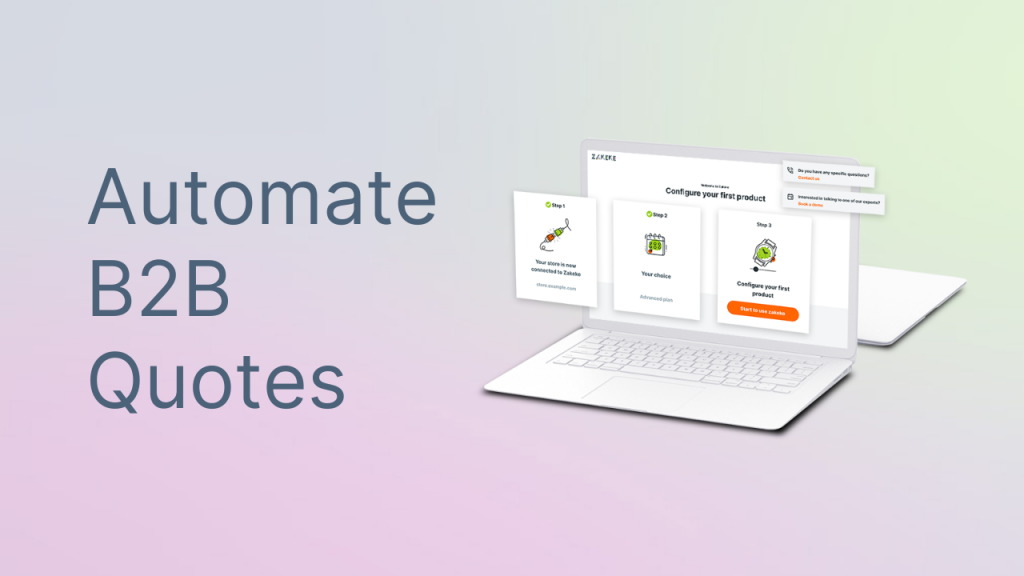
Today’s business buyers expect a streamlined, digital purchase experience. If you’re still using manual quote management processes, you’re likely losing out on sales. Especially for businesses offering customizable products, automating quotes on ecommerce platforms is crucial. How can you do it? Have you ever considered implementing a Product Configurator? Let’s start from the beginning and discover why implementing a Product Configurator can significantly automate B2B quotes on ecommerce and boost your store’s performance. What Are Quotes On Ecommerce? When Do You Need Them? Why should an ecommerce store offer the option to get quotes? There are many cases where quotes can prove to be essential for an online store. Let’s think about high-quality, limited edition products, for example: for these products, perhaps it would be better to offer the possibility to request an immediate quote rather than immediately communicating the price and potentially frightening the customer, right? And then, let’s consider the case of made-to-order products, those crafted and personalized directly by customers online. A bag, a pair of shoes, a designer accessory: you can choose to show the price immediately, which changes with dynamic pricing rules, or to offer the option to request a quote, giving the customer an exclusive price and a limited time to complete the order. Given the utility of this feature, it’s crucial to know how to manage quotations easily. Let’s see why. Challenges in Manual Quotation System Like all operations within a business, quote management is an activity that must be handled efficiently, automating everything possible to reduce operations and errors. Why manual management of quotes isn’t the best solution? Here are the main reasons: Automate B2B Quotes: You Need The Right Software! To offer B2B quotes on your ecommerce platform, you need the right online quote software. What is it? It’s a software solution that enables you to automate the quoting process and provide personalized quotations to clients automatically. Especially if you sell customized products online, a Product Configurator can be the all-in-one solution for offering B2B quotes and making your products customizable. Implementing a Product Configurator can significantly streamline the process of generating quotes for customized products on your ecommerce platform. This tool allows customers to tailor their products according to their preferences and specifications, such as size, color or features, and enables businesses to create customized quotes for their products and services. By inputting key information about the product or service being offered, the Configurator can generate a tailored quote that considers the customer’s specific needs. Product Configurators are excellent for B2B companies that offer complex products or services. By automating the quoting process, businesses can save time and resources while providing their customers with accurate, personalized quotes. Benefits Of Using a Product Configurator to Automate B2B Quotes A Product Configurator offers several benefits for businesses, including: Faster quote turnaround Customers today expect a quick and easy purchase experience. They don’t want to wait days or weeks to receive a quote. In this case, it’s up to businesses to provide a fast and efficient quoting process. A Product Configurator can help businesses speed up their quote turnaround times by automating the process. When customers have already designed their product or service using the configurator, all that’s left for the business to do is generate the quote. This can be done in a matter of minutes, allowing businesses to close deals faster. Increased accuracy When quotes are generated manually, there’s always a risk of human error. This can lead to inaccurate quotes that don’t reflect the true cost of the product or service. A Configurator eliminates this risk by automatically generating accurate and up-to-date quotes. This ensures that customers receive an accurate quote the first time, every time. For example, if the price of a product changes, the configurator will automatically update the quote to reflect the new price. Improved customer satisfaction Personalized, accurate quotes lead to happier customers. If they receive a quote that doesn’t reflect their needs or budget, they’re likely to be disappointed and may even look elsewhere for a better deal. On the other hand, if they receive a quote tailored to their specific needs, they’re more likely to be satisfied with the purchase. Automate B2B quotes can help businesses create quotes tailored to each customer, leading to improved customer satisfaction. A Configurator can also help businesses upsell and cross-sell by suggesting additional products or services that the customer may be interested in. Better conversion rates When customers are satisfied with the quoting process, they’re more likely to convert into paying customers. The higher conversion is a result of both the improved customer satisfaction and the faster quote turnaround time. This software can help businesses increase their conversion rates by automating the quoting process and creating personalized quotes tailored to each customer’s needs. For example, if a customer is interested in purchasing a product but isn’t sure which model to choose, the Configurator can suggest different models that meet their needs. This helps businesses close more deals and grow their revenue. Lowered costs Manually generating quotes can be time-consuming and expensive. Businesses need to dedicate staff members to the task, and they may even need to outsource it to a third-party company. Quote automation using a Configurator can help businesses save money by automating the quoting process. By using a configurator, companies can generate quotes quickly and efficiently, without the need for extra staff or outsourcing. Tips For Using a Configurator For Quotes When you’re using a CPQ for a B2B business, there are a few things to keep in mind: Start Automating Your B2B Quotes With Zakeke CPQs are a valuable tool for any B2B business. By automating the quoting process, they can help businesses save time and money. They can also improve customer satisfaction by creating personalized quotes that cater to each customer’s needs. When using a CPQ, it’s important to keep a few tips, such as ensuring that the configurator is easy to use and accurate. By following these tips, you can make the

Read More >