
FREE LOOKBOOK

How 10 E‑Commerce Brands Use Personalization to Stand Out

3D Shopping

printing customization
3D Shopping

3D printed products: applications and use cases 

3D printing is a relatively new technology that allows the creation of three-dimensional objects from digital models by building up layers of printable material. In recent years, it’s become a real game-changing technology and is poised to revolutionize industries around the globe from manufacturing to pharmaceuticals.  While the concept of 3D printing has been around since the 1980s, it’s only become a practical endeavor in recent years. With the advent of more affordable 3D printers and software that makes the process more accessible, the technology can now be utilized by individuals, small businesses, and sprawling enterprises.  3D printing has opened up new, unprecedented possibilities in terms of product design, prototyping, and production, making it a valuable tool in industries such as aerospace, automotive manufacturing, healthcare, architecture, and many others. Let’s find out what are the best-selling 3D printed products for sale today! Applications of 3D printed products 3D printing technology can be used in virtually every industry around the globe, and companies are finding new and innovative ways to utilize 3D printed materials all the time. Here are just a few examples of notable applications of 3D printed products: Advantages and benefits of 3D printing The advantages of 3D printing are manifold. First and foremost, 3D printing technology allows for the creation of highly customized and intricate objects that would be difficult or impossible to produce with traditional manufacturing processes.  With a 3D printer, it’s possible to produce complex geometries, including interlocking parts and moving mechanisms. Additionally, 3D printer files can be easily shared and modified, enabling collaboration and innovation across a diverse range of industries.  Currently, 3D printers are being used in the healthcare industry to produce customized prosthetics, medical implants, and even human tissue and organs. This has the potential to revolutionize healthcare by allowing for personalized medicine and reducing reliance on traditional donor-based transplants.  In truth, the benefits and applications of 3D printed goods are still being discovered and evolving, and because of this, 3D printing promises to be an exciting and powerful technology for the future.  Future trends and innovations in 3D printing 3D printer software has come a long way in recent years, and the future of 3D printing looks promising, with exciting trends and innovations on the horizon: Overall, the future of 3D printing looks bright, with new applications, innovations, and trends developing all the time. What are some good 3D printer projects or 3D printing ideas to sell? Some common 3D printer projects and ideas include customized phone cases, jewelry, home decor and toys. Have you ever thought “How to sell 3d printed products” or “How to get started with product customization in my e-commerce”? This is where Zakeke comes into play! It enables users to create customizable products with an easy-to-use design tool that allows users to personalize products in real-time and see a 3D preview of them. To begin, all you have to do is set up an account and integrate the Zakeke plugin within your e-Commerce platform. Next, configure your products to enable customization options (like text, images, colors, etc.). You can then design your product templates using the Zakeke design tool, and customers can use the tool to create their own unique designs.  Ready to take your business to the next level? Try out Zakeke for 14 days.
Read More >
3D furniture
3D Shopping

3D Furniture Design: Benefits and Applications in E-Commerce

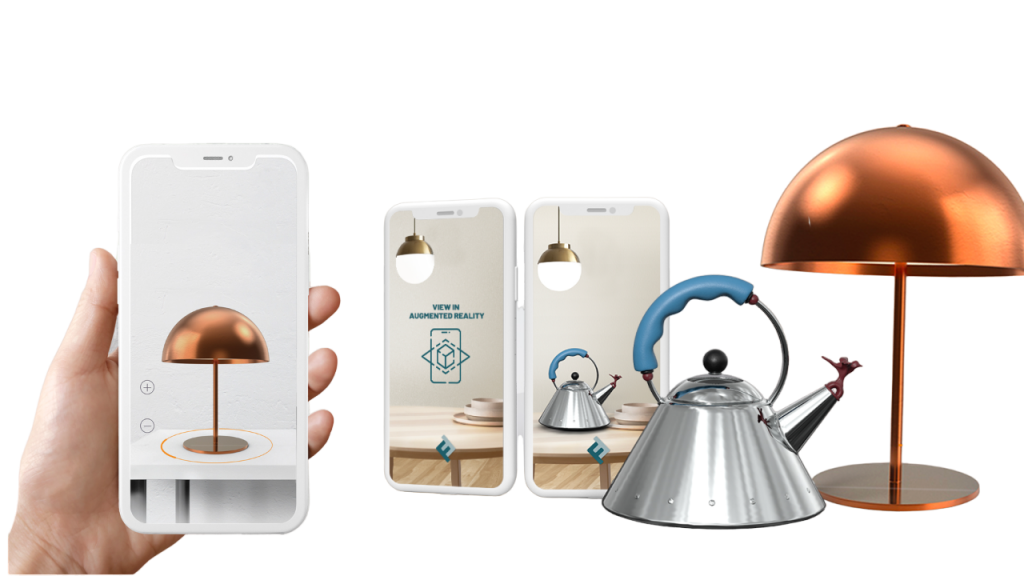
As in all sectors, the furniture industry is becoming increasingly digital and competitive. Consumers are constantly looking for immersive and high-quality experiences. Merchants don’t only have to offer quality products, but they also have to present products accurately to customers, allowing them to see products in all details and into their own spaces. Therefore, even a market like Furniture & Equipment must necessarily adapt to new standards and evolve in this direction. How? By embracing new technologies, such as 3D product visualization and Augmented Reality. So, welcome to the world of 3D furniture! Especially for those running an e-commerce store, it’s crucial to present their products in the best possible way, highlighting materials, colors, and above all, allowing customers to visualize them in a real environment. This is where Visual Commerce with 3D furniture design comes into play. Let’s explore how technologies such as 3D & AR can improve performance in the furniture industry and build a better Shopping Experience for customers. What do we mean by 3D furniture? 3D furniture design is the process of creating digital 3D models of furniture and visualizing them in a virtual environment. 3D technology brings products to life, allowing customers to see them from every angle and in much more detail. Imagine seeing a 3D model of a couch or a chair, isn’t that impressive? 3D Visualization and Augmented Reality are a must-have for the furniture market today, especially when it comes to the e-commerce world. These technologies allow merchants to showcase their products by recreating the in-store Shopping Experience, allowing customers to see and interact in real-time with products. Creating a 3D sofa and seeing 360° view of products allow designers to highlight the product details, while using AR allows customers to position it in a real environment, helping customers to make confident purchasing decisions. Key applications of furniture 3D rendering How can you use 3D furniture design? This innovative technology finds applications across both physical and digital realms, enabling a versatile range of uses from testing furniture prototypes to enhancing online sales experiences. 3D furniture design and visualization technology are pivotal in both residential and commercial furniture projects. Designers leverage this technology to tailor custom furniture pieces for individual clients, as well as to conceptualize and create furnishings for hotels, restaurants, and various commercial settings. This enables the possibility to virtually place and test furniture within an environment, using detailed 3D models to assess aesthetics, functionality, and spatial dynamics without the need for physical prototypes. For furniture vendors, 3D rendering and models become an indispensable tool in the development and presentation of their catalogs. It allows for the seamless showcase of furniture variants in different colors, materials, and configurations directly in-store or through digital catalogues. This not only enriches the customer’s experience but also streamlines the decision-making process, offering a tangible sense of the product before purchase. Moreover, integrating advanced UI design software into the development process can enhance the user interface of 3D visualization tools, providing intuitive controls and immersive experiences for both designers and customers alike. In the realm of e-commerce, the integration of 3D software for furniture design into online platforms revolutionizes the way furniture is marketed and sold. It elevates the shopping experience by allowing customers to visualize products in a highly interactive manner, including the exploration of various customizations and viewing products in AR to test their fit within actual living spaces. This immersive approach not only enhances customer engagement but also significantly aids in reducing the hesitation associated with online purchases, leading to better satisfaction and reduced return rates. Benefits of 3D modeling in design and interior decoration One of the most common uses of 3D technology in the furniture industry is certainly in the world of design and interior decoration. Using 3D technology in furniture design offers many benefits, including: Benefits of AR & 3D in furniture e-commerce As we’ve already said, using 3D ecommerce offers many advantages, especially for those who manage an online shop. Why do you need furniture 3D design software? A standout benefit of 3D technology in e-commerce is its ability to animate products, providing customers with an in-store visualization experience from the comfort of their own homes. With 3D furniture designing apps, products can be viewed from every angle and placed within actual settings, facilitating a quicker and more informed decision-making process for buyers. Developing a 3D furniture catalog serves as a powerful marketing tool. Sharing 3D models offers a more engaging and immersive experience than traditional photos, significantly enhancing customer interaction with the product. For online furniture retailers, 3D and AR technologies are crucial in shortening lead times and reducing returns. Enhanced product visualization helps customers gain a comprehensive understanding of the item, ensuring they know precisely what they are purchasing. 3D visualization software enables a closer examination of a product’s materials, textures, and details than is possible with standard photos, aiding customers in making quicker and more confident purchase decisions. Incorporating 3D technology fosters sustainability by displaying all product variations without the need for physical samples. This approach not only conserves resources but also broadens the product showcase without the environmental footprint associated with producing and shipping multiple physical prototypes. Zakeke: how to get started with the best furniture design software If you’re searching for the best furniture design software, look no further! Zakeke has you covered as your ideal partner. Zakeke stands out as the comprehensive Visual Commerce Platform that boosts e-commerce brands by offering their customers options for product customization, 3D configuration, and web-based Augmented Reality. With Zakeke for furniture, you can animate your products, offering a realistic portrayal through 3D & AR, while enhancing features like materials and textures. Effortlessly create your 3D catalog and share it across all channels using simple QR codes and links – no apps required. The best part? Zakeke enables customer customization of furniture, chairs, and virtually anything, through our 3D Product Configurator. Showcase all possible variants, allowing customers to design their own products on your website, with

Read More >
360 product viewer
3D Shopping

360 Product Views For eCommerce: 5 Pros & Starting Tips

Over the past few years, consumers have gotten used to the convenience of shopping from the comfort of their own homes. Even before many countries and states were experiencing mandatory lock-downs and instilling stay-at-home orders for the prevention of the spread of the coronavirus disease, consumers were enjoying the ease and comfort of shopping online for their essentials and decorations.  However, since the COVID-19 pandemic has been affecting countries all over the world, this desire to utilize online shopping methods far outweighs many people’s desire to shop in stores. This has led to a dramatic increase in the number of businesses on the online market and this number is continually increasing as more and more businesses are building their own online presences in order to keep up with their competition. Whether you are a large chain corporation or a small single-person-run business, there are important trends to keep up with if you don’t want to risk falling behind your competitors: 3D product visualization and 360 product views are among them. Todays’ Ecommerce Trends Let’s find out which are the main new trends that are driving e-commerce today: What Customers Want: 3D Experiences Customers want to know what they are buying when they are purchasing something. Unfortunately, with the majority of shopping happening online where things can often be difficult to accurately assess, this can be challenging for customers who are looking for something that will fit in a space or something that simply has the features that they are looking for.  Because of this, it is extremely important to be attuned to the evolving technology that can help your business give your customers easy access to the information they need to make informed and confident decisions.  After all, businesses today are more focused than ever before on customer satisfaction and customer experience. With so many competing products and brands on the market today, creating a loyal and satisfied customer base is an essential part of running a business.  So, how can you make your customer experience better and give them a more realistic view of your products? Simple, use 360-degree or 3D product views for the products you offer. This technology can also be a great way for businesses to promote custom-made or customized products and it can help your customers not only see what exactly they are buying but also how it will look once it is in their homes.  This allows customers to get a better connection with the product and can help to improve the chances of a sale. A 360 product viewer with hotspots can be a great way to help your customers feel like they are getting a more interactive and enjoyable experience while still not requiring them to leave their homes when they are looking for a new product. What Is a 360 Product Viewer? A 360 product viewer software is a tool which enables e-commerce businesses to present their products interactively and engagingly. It provides customers with a 360 degree view of products, allowing them to zoom in or check every detail from all angles. With a 360 product viewer, customers can really experience the product with a more realistic and customized shopping experience. Benefits of 360 Product Views The use of 360 product viewer software is incredibly helpful for customers who are purchasing a product. What are all the benefits of 360 product views? A 360 product viewer helps customers to see a more detailed view of the features and dimensions of the item. It allows them to feel more confident in their decision to purchase the product and therefore increases the likelihood of a customer making a purchase. Another advantage is the possibility of creating a 360 spin image of products, much more engaging for the customer. 360 product views also allow the customer to feel more like they are in a traditional brick-and-mortar store without actually having to leave their homes. By providing them with the ability to zoom in and “turn over” products virtually with a 3-dimensional model of the product, customers can feel like they are interacting with your products like they were in a store. A 360 viewer also helps businesses reduce the number of returns and unsatisfied customers that they have due to products not being what the customers think they are. Seeing products in 3D, and visualizing all the details, helps customers make purchase decisions. 360 image viewers attractively present products, making them stand out from the competition: that’s why a 360 product viewer can improve product visibility and attract more customers to the website. Think about 3D advertising: it’s able to showcase even the most complex products, helping customers understand the true value of the product even without seeing it in person and through a screen. With a better product presentation and an improved Customer Experience, it will be easy to boost e-commerce sales. Since these 360 images can be so much more engaging for customers, it can be a great idea for businesses to implement an easy 360 product viewer software solution, like Zakeke’s 3D & AR Product Viewer, that can help them offer these more interactive product descriptions to their customers.  With Zakeke’s software, businesses can see up to a 250% increase in conversion rates and appeal to the 70% of customers who prefer interactive 3D models to video or static photo product advertisements. 3D and 360 Product Views: What’s The Difference? When it comes to 3D commerce, you may be wondering if a 3D or 360-degree viewer would be better or if there even is a difference between the two.  This is a challenging question because oftentimes these two types of views will be used interchangeably within companies and software solutions. This means that it is hard to give a concrete answer on what exactly defines a 3D view and what exactly defines a 360 view. That being said, there can be some differences between the two so it is important to know what type of view you are looking

Read More >
3D visualization software Zakeke for shopify
3D Shopping

How 3D Visualization Software Can Boost E-commerce Sales

In today’s incredibly competitive digital marketplace, it can be extremely difficult for businesses to put themselves ahead of their competition. But, as the online marketplace continues to get more and more crowded, it is more important than ever for businesses to do just that.  Whether that means creating interactive product quizzes, offering incredible customer service, or using some of the most innovative technology, businesses need to determine what they can do to get their products and services noticed by customers before they lose those buyers to their competitors. When it comes to new technologies, the world of AR (Augmented Reality) and 3D visualization software is one of the newest and most innovative options that a business can use. Let’s dive deep into the world of 3D eCommerce and see how you can leverage these technologies to boost your performance. What is 3D Visualization Software? 3D product visualization technology can be used to better engage your customers and allow them to see the products that you offer in greater detail. The human brain processes the world in three dimensions because we live in a three-dimensional world.  The fact that most businesses offer products only in 2-dimensional pictures can make it difficult for people to really understand the dimensions of the object and how it would fit in a space. But a business that uses a 3D visualizer can bypass this confusion and possible irritation when a product isn’t like the customer pictured it. This is why you are offering the customer a 3-dimensional view of the product. In the past, when a person wanted a new couch or a new end table for their bedroom, they would go to a furniture store and browse the selection of furniture options for a piece that would fit in the space. People could easily judge the size and dimensions of the product by seeing it in 3 dimensions — like they are used to seeing things in the world.  But today, when most people do their shopping online, it can be incredibly difficult for people to accurately judge what a product looks like from a 2-dimensional image. So, if you want to set your products apart from your competitors you can offer a 3D product visualization online.  3D Visualization Examples: How to Use 3D Visualization Software? As technologies such as virtual reality and Augmented Reality continue to advance and become more and more popular with consumers all over the world, it is becoming easier for businesses to utilize these technologies to help them better appeal to their customers as well.  3D modeling and visualization, as well as augmented reality (AR), has been especially helpful for businesses that are looking to offer a more detailed and intuitive look at their products. This allows customers to better understand what the products are and how they exist in a 3-dimensional environment — which is, of course, the environment that they are used to experiencing life in.  Luckily, since this technology is becoming more and more accessible for businesses and customers alike, there are a number of good visualization examples available online today. Your business can use these examples as inspiration for creating your own 3D product visualizations: Finding a 3D image visualization example is much easier today than it was in the past. There are a number of companies that offer 3D product previews so that customers can see products in better detail.  Benefits of 3D Visualization Services In today’s digital marketplace, businesses of all kinds are seeing a rise in 3D visualization and augmented reality (AR) technology. Since the COVID-19 pandemic began, over 32% of consumers are using augmented reality for their online shopping.  These technologies give customers the ability to see the products they want to purchase in a 3-dimensional environment and with augmented reality, they can even see those items in their current spaces. This can be incredibly useful for purchasing furniture products or other products that you need to fit within a space. Since so many customers are becoming more and more familiar with and willing to use 3D visualizers and AR technology, it can be extremely beneficial for businesses to adopt software solutions or consultants who can help them create these more interactive and engaging product visualizations.  By the year 2028, the industry is predicted to be worth $97.96 billion dollars. Because of this continued growth and advancement of 3D technologies, it can be a good idea for businesses to consider adopting 3D visualization software for their products earlier rather than later. As the market continues to get more and more crowded, it is becoming increasingly difficult for businesses to stand out from their competitors.  But, with 360 product views and augmented reality technology, you can gain an advantage over competitors by offering a more engaging experience for your customers. There are a number of advantages that 3D visualization techniques, such as augmented reality, can bring to your business.  Some of the most important benefits: Benefits of 3D for Merchants Many businesses have already begun integrating 3D visualization software and augmented reality tools into their online stores because consumers are able to effectively engage with products. Therefore, they are able to have a much more pleasant customer experience. In today’s society, there is a much stronger emphasis put on customer experience.  More and more businesses are finding that even if the only thing differentiating their products or services from their competitors is their customer experience, the business with the better customer experience will gain more customers. Since 3D visualization online is able to provide a better experience, this means that the companies that offer these more advanced visual experiences will be the ones that customers will prefer. There are several advantages of 3D visualization for e-commerce companies: Benefits of 3D Product Visualizer for Customers  One of the great things about 3D visualization software in e-commerce is that it provides a number of benefits to both customers and businesses. This is incredibly important in today’s society because consumers are becoming more and

Read More >
2D e 3D
3D Shopping

Creating Sustainability with 3D and AR

Businesses are moving away from traditional production processes and towards sustainability as a culture, introducing on-demand manufacturing for example, that provide exciting consumer experiences.  This makes sense on many levels as sustainable processes save the business time and money, they are attractive to customers who seek out companies following green initiatives, and they create an opportunity to generate more brand awareness and brand affinity. When businesses present consumers with options to customize and/or personalize products in e-commerce, they feel engaged. More than 3/4of consumers have chosen, recommended, or paid more for a brand that provided a personalized experience. That’s the value that 3D product configuration and Augmented Reality (AR) bring to e-commerce.  Visualization, Customization, and Personalization are Key  Consumers increasingly expect higher engagement from the brands with which they interact. Research has found that 83% of consumers emotionally respond to strong visuals and movement in products such as those in 3D renderings where products can be virtually manipulated and rotated.  Brands have a tremendous opportunity to interact with their consumers using visualization, customization and personalization tools on their ecommerce site. By offering products with seemingly endless feature options, such as material, color, texture and other attributes, the consumer is put in the driver’s seat and builds an item that’s unique to their style and their needs.  As the consumer is configuring their items, they can see them from every angle with 3D technology, gaining a very clear idea of the product they’re about to purchase. A personalization option completely distinguishes items such as clothing or shoes from any other with unique stitching, initials, images or words.  Brands can use Augmented Reality directly from a browser or mobile app making it possible for consumers to actually place the product on a flat surface in front of them and see the item in extreme detail, from their own home. With technologies making it easier to shop online, 25% of consumers believe they will shop in physical stores and malls less than they did previously. In this way an engaging e-commerce platform becomes a necessity. One positive side effect of this change is that consumers and brands are saving energy and money by reducing returns, lowering the number of trips to the store and increasing product use and satisfaction. 3D and AR are Sustainable and Cost-Efficient Solutions  Sustainable solutions are becoming increasingly urgent in every industry, not only to reduce waste but also to become more scalable. For instance, USD $230 billion in apparel and footwear is unsold, with no place to go. That means there’s endless amounts of warehouses storing products that are just shelved, waiting to be pushed into the market at a high expense, and with discounted prices. Another major issue that brands face are returns. In fact, 35% of apparel and footwear is returned each year; that’s three times more than in general e-commerce; that’s billions of dollars worth of unwanted products.  Using a 3D configurator and AR technology to front end an on-demand manufacturing process plays a major role towards sustainability. Orders come through, are paid in full, and are produced specifically for that consumer. With a direct-to- consumer process, the item is never shelved, and rarely returned.  Combined with a CPQ and an Enterprise Resource Planning (ERP) system, every order via a 3D product configurator generates a complete Bill of Materials that feeds into the manufacturing process. A list is created of all the raw materials, parts and quantities needed to produce the item that goes directly into the company’s ERP system, reducing errors in the order processing. It’s the sustainable solution any business needs; you only produce what’s ordered, using up raw material smartly. Using a 3D configurator enables a dynamic supply chain solution that is fast, cost-efficient and sustainable creating wins all around as brands reduce waste, reduce costs, increase satisfaction, and create sustainable processes that consumers can get behind.  If you are wondering what you can do with Zakeke, check out our DEMO STORE. Supported Platforms: DISCOVER ZAKEKE START A FREE TRIAL   Stay up to date and follow us on LinkedIn, Facebook and Instagram

Read More >
3D rendering of a chair
3D Shopping

What is 3D Rendering?

3D rendering bridges the gap between computer models of objects and the 2D images customers prefer interacting with. It lets sellers and merchants create vibrant product imagery in a wide range of styles – without having to commission an artist or photographer.  How does 3D rendering work? Here’s what to know about transforming models into image, video, and AR assets that drive engagement and keep customers satisfied. Preparing for Rendering With 3D Modeling  When a designer, architect, or product creator builds a model, they typically use computer software to define the shape. For instance, they might construct a box-shaped package by defining points corresponding to the corners at the preferred width, depth, and height. Then, they could use this model as a skeleton – or base – for things like your brand imagery, product details, and other information you’d want printed on the box. This process results in the creation of a 3D model file. While there are dozens of different formats that describe such models accurately, they generally share a few characteristics, including: The 3D Rendering Process Now that you have a model, you’d like to turn it into something you can share – but simply putting the file on your website won’t do much without some extra processing. Although model files are designed to include all possible details about the objects they describe, they don’t make much sense to most humans. For instance, a list of points, edges, and faces doesn’t really tell someone what your model is all about unless they’re technically savvy enough to understand it.  The solution is to create an image, movie, or interactive tool that displays the model as it would appear in real life. This process is known as rendering. Appropriately, the word rendering comes from the art world – someone who paints a picture or sculpts a piece of stone might describe such work as rendering the form. In 3D rendering, software does the work using one of many possible techniques. Raytracing is a common way to render a 3D model into a 2D output image. It involves drawing an imaginary line between the camera and each pixel, or dot, of the final image. If the line, or ray, hits a point, edge, or face of the model, then the corresponding pixel will be drawn using the appropriate color from the model’s surface. If it misses the model, the pixel will show up as a background color. The same concept works with videos. The main difference is that instead of just rendering a single image, you’ll create a succession of them – one for each frame of the movie. All your software needs to do is recompute the calculations each time the model, scenery, or camera moves. From Experimental to Commonplace  Techniques like raytracing are widespread today, but they weren’t always so. Figuring out whether all those rays intersect a model is a tough mathematical problem involving complicated geometry. Even though computers have long been up to the task, they didn’t always accomplish it efficiently. In the early days, rendering an image might take days and dozens of computers working together – and the results weren’t always guaranteed to be high-quality. Thanks to the proliferation of lower-cost computer hardware, 3D rendering takes center stage in numerous aspects of modern life. For instance, it’s used in the film industry to transform models into characters, scenes, and backgrounds. Most modern interactive games feature some form of 3D rendering. It even shows up on many websites, where marketers use it to create images that look so much like product photos that typical consumers don’t even notice the difference!  Faster rendering speeds have also opened the door to an entirely new type of consumer engagement: the interactive product view. Simple renders can be processed or displayed in real-time, so you can create widgets that let users rotate, zoom, and examine items at their discretion. Since model files are typically way smaller than videos, rendering is a good way to save bandwidth and keep your site responsive. Why Is 3D Rendering Such a Popular Engagement Tool? One of the coolest things about rendering is that it lets you choose how you want your model to look on the fly. For instance, you can: These benefits are just the tip of the iceberg. For instance, many companies use interactive product views to help consumers avoid buyer’s remorse – someone might be less likely to ask for a return if they can confirm how an item looks in advance. There’s another big advantage of letting a shopper play around with a model or take it for a realistic spin in their AR living room: Keeping their eyes on a product longer might increase the odds they’ll remember to add it to their cart. Another huge advantage of 3D-rendering is that it enforces consistent branding. When you want to change your logo, labeling, or other important aesthetic aspects, you don’t have to rehire a photographer to take images of all your products: You just update the model and let the rendering software do the work behind the scenes.  There are endless possibilities when it comes to using 3D and AR technology, but the main goal is always to create an interactive experience that allows customers to better understand your product. By giving them a realistic view of what they’re buying, you’re sure to increase sales and brand awareness. If you’re looking for a way to engage the customers your brand already has and attract new ones, 3D and AR technology might be the answer you’ve been looking for. Modern 3D rendering is a transformative force in the marketing world. Like anything, however, it demands attention to detail and experience, particularly when you want your products to look good in integrated settings – like AR or your existing e-commerce platform. Check out Zakeke to discover how high-quality, seamlessly integrated 3D configuration can transform your perspective on customer engagement. If you are wondering what you can do with Zakeke, check

Read More >
custom tshirt
3D Shopping

Free Photorealistic Apparel Mockups for online store

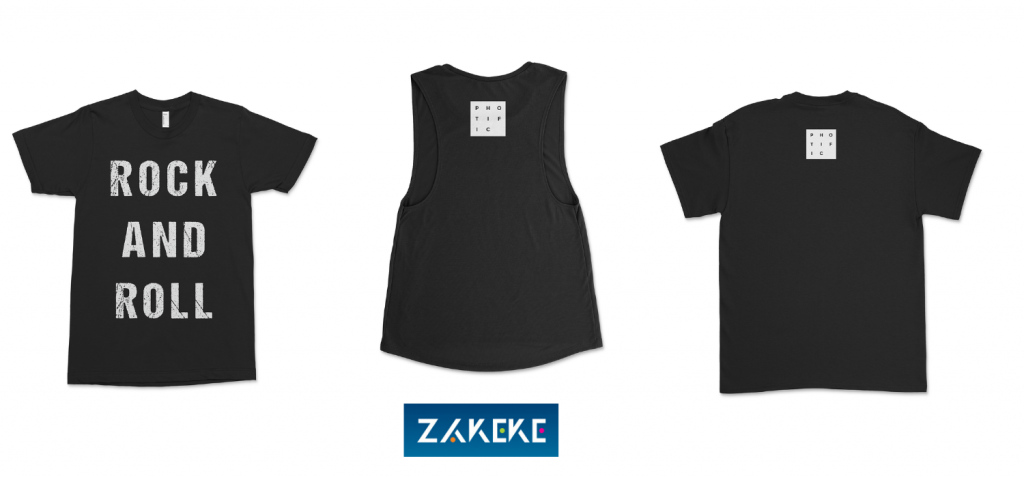
A wonderful online clothing store needs wonderful shots showing the items. You have no graphic skills? Not sure how to use Photoshop? Don’t you have clothes on hand? Don’t have a professional camera? No fear. This is what photorealistic apparel mockups from Photific do. Not just any mockup generator. The only truly photo-realistic mockup available. Exclusively for Zakeke customers and friends, Photific offers 10 of their most popular Photoshop mockups for free. Don’t have Zakeke? Sign up now for a free trial! How get the mockup pack for free? Click here Enter your e-mail to receive a free download link The mockups pack includes: American Apparel 2001 Anvil 780 Anvil 6750 Bella 3001 Bella 8803 Comfort Colors 1717 Gildan 2000 Next Level 6210 Next Level 3900 M Infant Lap Shoulder Onesie Please note that mockups will only work in Adobe Photoshop CC or Photoshop CS3+. They will not work correctly in any other software. Of course, you can get additional mockups here. Meanwhile, try the free demo of Photific instant app generator. Stand out from the competition. Offer quality. Choose Zakeke for your product customization and use Photific to be realistic. DISCOVER ZAKEKE START A FREE TRIAL     Stay up to date and follow us on LinkedIn, Facebook and Instagram

Read More >