
FREE LOOKBOOK

How 10 E‑Commerce Brands Use Personalization to Stand Out

Printing

Optimizing printing fulfilment
Printing

How to Optimize Printing Fulfillment for E-commerce Success

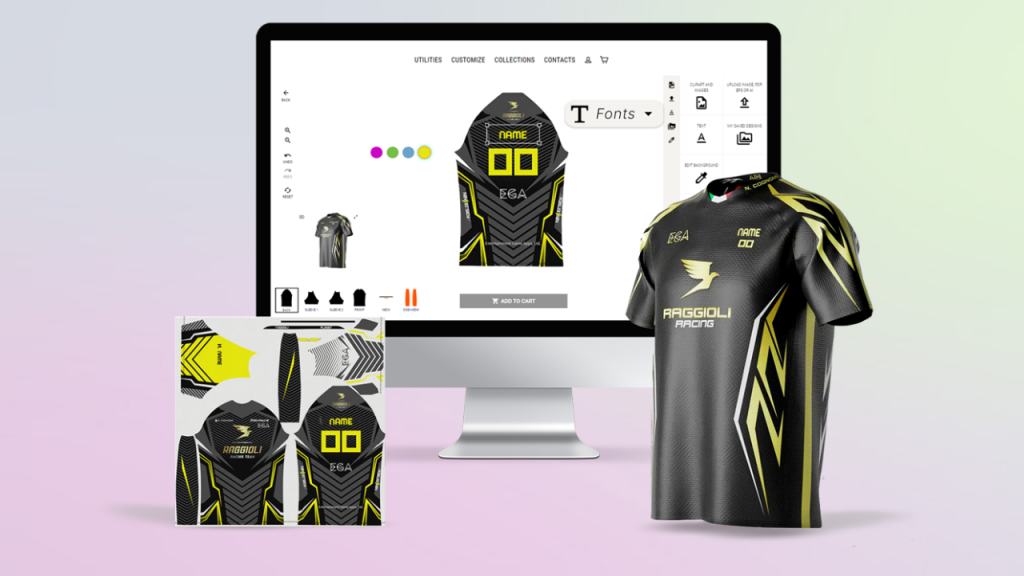
The e-commerce industry is undergoing an enormous metamorphosis, moving from a domain dominated by mass production to a bustling forum for customized engagement. Before you start exploring every aspect of optimization, it is important to understand why optimization is such a sensitive yet one of the most crucial components while working to build a successful e-commerce business. Enhanced customer satisfaction, streamlined processes, and a competitive advantage in the market are all directly correlated with optimized printing fulfillment. Deliveries that are on time and free of errors enhance customer loyalty and brand reputation. The increasing demand for customized printed items might be caused by the need of modern consumers for distinctive products that align with their own definition of innovation. These products address the rising need for self-expression and a feeling of ownership, whether it’s a phone cover with a customized artwork design or a t-shirt embroidered with priceless memories. Nevertheless, mastering the complex art of printing fulfillment is essential to establishing a successful e-commerce business centered around individualized products. This complex process, which is frequently an invisible hand, is what makes a customer’s imaginative vision a reality; it necessitates careful planning, astute alliances, and ongoing optimization. The integration of cutting-edge technologies is the foundation of printer fulfillment optimization. The integration of cutting-edge technologies is the foundation of printer fulfillment optimization. Purchasing cutting-edge printing supplies and implementing cutting-edge methods can greatly increase the printing process’s efficiency, accuracy, and quality. Using high-resolution printing and investigating eco-friendly material possibilities are just two ways that keeping up with technical changes may keep your company at the forefront of the personalized product industry. Without any further delay, let us delve into the details of printing fulfillment. Printing Fulfillment: An Explanation Printing fulfillment within an e-commerce business involves the intricate process of transforming digital designs or customer orders into physical, personalized products for shipment. This is particularly essential for businesses specializing in customizable products such as clothing, accessories, and various merchandise. The journey from a customer’s order to the delivery of a tangible, customized product encompasses several crucial steps: 1. Order Placement The Order placement process initiates when a customer places an order on the e-commerce platform, selecting personalized options or uploading specific designs. Information, including the chosen design, product specifications, and shipping details, is collected during this phase. 2. Order Processing Then there is order processing. Once an order is received, the e-commerce system processes the information and forwards it to the printing fulfillment center. Order processing involves validating the design, checking inventory, and initiating the production workflow. 3. Design to Product After the initial stages, the process of digital design to physical product is started. The digital design provided by the customer undergoes translation into a physical product using various printing techniques, such as screen printing, digital printing, or sublimation. Advanced printing technologies ensure high-quality and accurate reproduction of the customer’s design. 4. Quality Control The paramount component of printing fulfillment is quality control. Rigorous quality control measures are implemented at different stages of production to ensure the final product meets or exceeds customer expectations. Inspections may include checking for color accuracy, print alignment, and overall product quality. 5. Order Packaging Following successful quality control, the product moves to the packaging stage. Packaging is carried out with care, often including branded materials, and may involve adding promotional items or personalized touches to enhance the unboxing experience. 6. Shipping and Logistics Shipping and logistics are the holders of the gleaming spotlight after the packaging has taken place. The packaged product is then handed over to the logistics team for shipping. Shipping options chosen by the customer during the ordering process are applied, and the product is dispatched to the designated address. Last but not least comes the delivery, this final step involves the product reaching the customer, who can then enjoy their personalized item. Tracking information may be provided to keep the customer updated about the delivery status. In addition to these steps, there are certain aspects of printing fulfillment in a successful e-commerce business. For instance, printing fulfillment is vital for businesses offering customizable products, enabling customers to add a personal touch to their purchases. Streamlining the printing fulfillment process is crucial to meet customer expectations for quick turnaround times while maintaining high-quality standards. In addition, rigid quality control ensures that the final product meets specified standards, minimizing errors and enhancing customer satisfaction. Moreover, e-commerce businesses often integrate their platforms with printing technologies to automate order processing and reduce manual errors. In essence, printing fulfillment in an e-commerce business serves as the link between digital creativity and tangible, customized products. It necessitates a combination of advanced technologies, efficient workflows, quality control measures, and strategic partnerships to provide customers with a seamless and satisfying experience from order placement to product delivery. Challenges in Printing Fulfillment As much as printing fulfillment sounds like an impressive fascination, thousands of challenges dwell behind it. These include: For companies hoping to give their clients a dependable and flawless printer fulfillment experience, recognizing and resolving these issues is essential. Overcoming these challenges and improving overall operational efficiency can be accomplished through the development of strategies, technology investments, and strategic alliances. Why It Is Important to Optimize Printing Fulfillment Even though printing fulfillment seems simple, it needs to be optimized if you want to succeed in the e-commerce space, especially if you sell bespoke printed goods. This is the reason why: There’s more to optimizing printing fulfillment than just product delivery. It’s about giving your customers a flawless and satisfying experience, developing a solid brand identity, and setting up the foundation for long-term success in the dynamic world of e-commerce. And this helps in shaping your ideas into a 3D model. Optimizing Printing Fulfillment: Main Steps Learning the art of printing fulfillment is essential in the dynamic world of e-commerce, where customized products are king. The unseen force is responsible for bringing customers’ ideas to life and creating a smooth, satisfying experience that increases brand loyalty and propels business success.
Read More >
Print Automation software
Printing

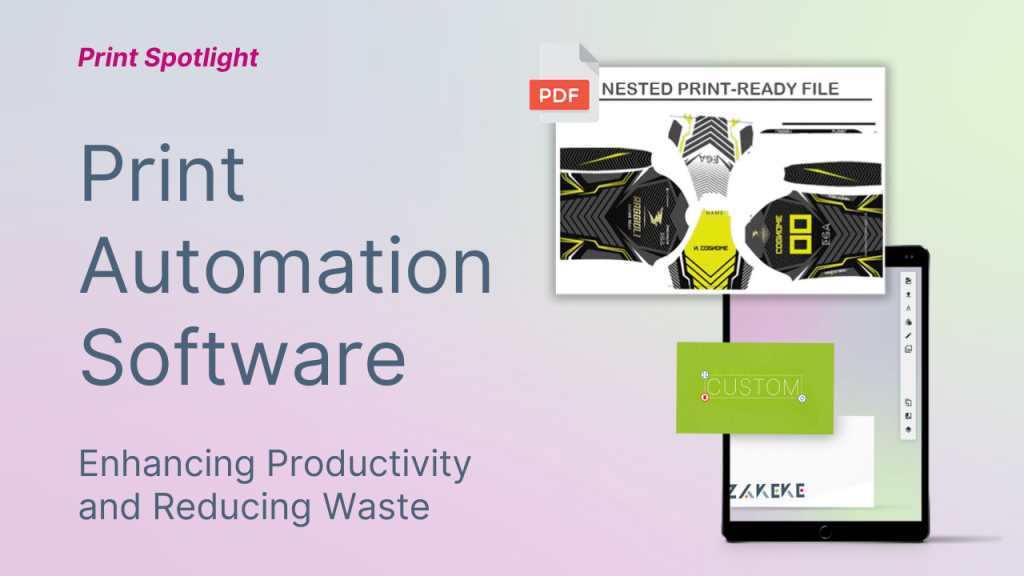
Print Automation Software: Enhancing Productivity and Reducing Waste

In today’s fast-paced business landscape, where efficiency and speed are paramount, the printing industry, along with most other industries, is undergoing a significant transformation through the integration of automation.  The business world is striving to keep up with ever-evolving technological trends and consumer demands and the printing industry is no exception.  Implementing automation software has become crucial for print businesses, especially those in the web-to-print and custom print and personalization arena, who are aiming to enhance productivity, reduce downtime, streamline day-to-day operations and ultimately boost profitability. What is print automation? Why it’s a game-changer? The goal of automation in printing is to create a smooth workflow from the very beginning of a job order to the point of delivery.  Great print automation reduces time and people-power spent on manual repetitive tasks across the workflow that can introduce errors and hinder productivity. It eliminates “touchpoints” where necessary and essentially increases speed to market.  Importantly too, is that through this streamlining, print businesses are able to keep prices competitive and greatly enhance services and indeed products for their customers. It’s a win-win.  From receiving orders, creating optimal print-ready files, manually uploading print specifications and parameters and ensuring the highest possible quality end product, to handling billing shipping and deliveries, there are numerous key points at which a print workflow can stumble, causing breakdowns and bottlenecks in production.  This is where automation software comes in. A technological game-changer that can revolutionize the way a print business operates and furthermore, according to an HP-sponsored study from Napco, businesses that have implemented automation, even on a small scale, show increased profits and production, higher throughput and increased speed to market, compared to those that haven’t. How to choose your print automation software Selecting the right print automation software is crucial. There are numerous products on the market, so how do you know what to choose? You need to map out your workflow and highlight the pain points. Identify your goals, the specific needs of your customers and the unique complexities of your custom products and materials.  You need to understand exactly what you’re trying to create for your customer and choose a software solution that can deliver it and that can adapt to the changing needs of your business and the market.  It should seamlessly integrate with your existing workflows, have the flexibility to adapt to the different printing techniques and processes that you may offer now and in the future. In short, it should enhance, not hinder. The key role of print automation in print personalization For printing stores specializing in custom printed gadgets, clothing and personalized products, automation is absolutely critical because there are so many different areas of potential automation for each personalized product and as such so many different areas that can break down, letting both the retailer and the customer down. Reflect on the myriad challenges of providing customized printed products: extended pre-press print production, heavy workload on design teams, continuous customer interactions for defining unique designs, endless hours in the studio creating mockups, manual editing of print-ready files, and frequent production errors. Does this sound familiar? Such hassles often lead to further issues like difficulties in managing tailor-made orders, missed deadlines due to operational inefficiency, and high return rates caused by lengthy lead times and a mismatch between the expected and actual custom products. What can really make a difference? The right print automation software, like Zakeke! Zakeke is designed specifically with these retailers in mind. By automating their processes, Zakeke will help custom print sellers reduce the risk of errors, deliver consistent high quality, boost the speed of order fulfilment, cut manual and costly manual tasks and ultimately enhance customer experience. From order placement to print-ready file preparation, Zakeke ensures a seamless process, allowing custom print stores to focus on what matters most – delivering superior, personalized products to their customers without burdening their team or risking the inability to scale due to an overload of operational tasks associated with customization. Automating your printing business and embracing personalization with Zakeke So, you’ve decided you want to up your automation game? Zakeke’s Visual Customizer e could just be the game-changer you’re looking for. It eliminates the need for time-consuming, manual preparation of custom print-ready files and reduces the risk of errors, creating a more reliable, efficient system and ensuring the consistent delivery of high-quality products. How does it work? Zakeke’s system allows customers to personalize products in real-time directly online (with a super user-friendly interface) and then sends designs straight to merchants’ printer or engraver post-sale, streamlining custom order management. No more lengthy pre-press processes and burden on design teams. Ideal for printers and printing providers, Zakeke is more than a web-to-print solution. It could be the best technological partner to grow your business by helping with pre-press management, printing workflow automation, and managing various printing techniques. One of the greatest advantages is that Zakeke, being a cloud-based platform, provides straightforward integration and operation, presenting a superior alternative to conventional software solutions. It seamlessly integrates with a range of printing workflows, maintaining existing operations without interruption – a flexibility vital for businesses aiming to adopt automation without the complexities of a full-scale revamp. The printing industry is changing, and automation software like Zakeke is playing a big part in this. Zakeke offers strong customization and easy automation and blends well with existing systems. This helps printing businesses, whether they serve retail or larger markets, unlock new levels of efficiency and customer satisfaction.  In other words, embracing print automation software like Zakeke unlocks new opportunities for growth and enables printers to thrive in today’s digital era.  

Read More >
Engraving printing technique
Printing

Unlocking the Secrets of Engraving Printing: A Detailed Guide

In this comprehensive guide, we uncover the age-old technique of engraving printing, exploring its applications, the intricate process behind it and how it seamlessly integrates into the ever-evolving world of print customization.  Whether you’re a print provider looking to diversify or a retailer wanting to broaden your online customized print portfolio, this blog will help you understand the nuances of engraving printing and how it can enhance your offering. A technique that brings an air of sophistication, engraving printing has found a real niche in the growing world of customization. This meticulous art form involves carving detailed designs into various surfaces using specialized equipment and skilled craftsmanship. Its allure lies in the ability to create detailed designs that exude a timeless quality, making it the go-to choice for those seeking a touch of elegance in personalized printed products. Let’s delve into the reading! How does engraving printing work? The process  Invented in the 15th century, numerous engraving methods have evolved over time but put simply, engraving printing is an intaglio printing technique in which a design is cut into the surface of a metal sheet or plate, usually copper but sometimes also steel.  The engraved plate is then covered in ink which fills the carved recesses, the excess ink is wiped away using kraft paper and the plate is pressed onto the substrate leaving an embossed image and/or text.  The method produces beautifully intricate prints with a raised, tactile surface and was traditionally the realm of highly skilled craftsmen painstakingly crafting the designs manually. But with modernization, it is increasingly done using specialized machinery and laser engraving technology that can carve minute details onto the plate in seconds, with intricate precision. While automation may take away some of the charm of traditional craftsmanship, conversely it has made this art form more accessible at a fraction of the cost and time. All the different engraving techniques There are numerous methods that can be used for engraving depending on the desired design and style.  The two key methods are mezzotint and drypoint engraving.  Another engraving printing technique is called etching, which uses chemicals rather than tools to take away layers of the copper to reveal the desired design. Manual artists may choose to use a combination of etching and engraving.  Clean lines and bold contrast designs are particularly suited to this technique, as are shaded and fine typefaces, with their intricate details, while white inks on coloured paper give particularly impressive results. It’s not suitable for two-sided printing due to the ‘bruising’ at the back of the pressed paper. Substrates such as classic, heavyweight papers and luxurious cards shine here, with the choice of surface adding its own character to the engraved items. The delicate balance between old-world craftsmanship and cutting-edge technology is what makes engraving printing both timeless and adaptable to the demands of the modern age, with mechanical and laser engraving achieving similar results in a fraction of the time. Which method comes down to personal choice, budget and time constraints.  Engraving & customization: a recipe for success Customization is where engraving really comes into its own, lending itself perfectly to this booming market, whether it’s to be used as a transfer printing process for stylish, personalized stationery or as a direct engraving process to customize your gifts and jewellery, for example.  Surfaces including metals, plastics, glass, wood and leather all lend themselves perfectly to the method, making possibilities for the consumer almost endless for adding a personal touch to transform regular items into sentimental treasures. Companies that successfully offer personalized engraving services while efficiently managing their design team’s workload through the use of effective software can achieve a significant competitive edge. This approach is becoming increasingly important as customers highly value unique and high-quality experiences.  Consider custom engraved products like jewellery such as necklaces or bracelets, home accessories such as cutting boards or glasses, or even gifts like picture frames or keychains, all engraved. Offering these types of products with ease could really make a significant difference. Mastering the art of custom engraving with Zakeke To offer custom engraved products without running into production or order issues, the first step is picking the right software. Zakeke is a game-changer in this area. It’s a super flexible Visual Customizer tool that fits different printing needs, such as engraving, making it easy to offer personalized products. Zakeke quickly connects smoothly with major online shopping platforms and fits right into your usual business process and workflow. You simply set up your own printing methods in the back-office and all the customization rules, and then your customers can design what they want based on those rules. Your customers can personalize their products and see what their engraving will look like on the product directly on your website, thanks to Zakeke’s live personalization and advanced 3D views. This makes shopping more confident and gets rid of questions like, “What will my custom necklace or keyring look like?” Customers get to see their engraved product in 3D in real-time, zoom in, and turn it around, almost like they’re in a store. Since you usually can’t return custom engraved items, Zakeke helps by showing customers exactly what they’re getting before they make a purchase. The best part is that Zakeke not only improves the Customer Experience, it also generates specific print-ready files for engraving print in SVG, PNG, PDF, DXF, BMP, AI formats, so all you have to do is download the right format for your equipment. No more problems with production, order management and file generation. In short, Zakeke makes engraving personalization easy and error-free, perfect for fast-paced custom work. Want to try out easy engraving printing? Start with Zakeke for a smooth experience.  

Read More >
Sublimation printing guide
Printing

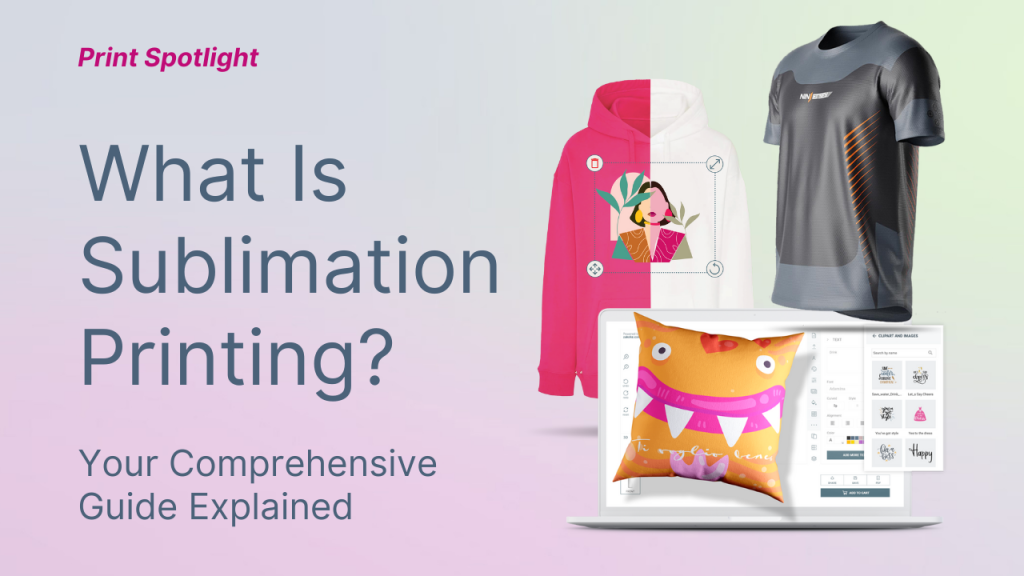
What Is Sublimation Printing? Your Comprehensive Guide Explained

Sublimation printing is a versatile printing method for adding vivid, full-color designs to a wide range of products. From clothing and accessories to woods and ceramics, sublimation printing has revolutionized the art of customizing everyday items with eye-catching graphics.  In this article, we’ll delve into the nitty-gritty. We’ll explore how it works, what products it can transform, pros and cons and how it compares to other printing methods.  Ready to dive deep into the world of sublimation? What is sublimation printing, and how does it work? The process of sublimation printing allows the transfer of full-color, high-resolution images onto a variety of man-made surfaces using a combination of heat and pressure. The technique involves the transformation of special sublimation inks, known as disperse dye sublimation, into a gaseous state at high temperature.  How to print sublimation images? A CMYK ink-mix is first printed onto a special transfer paper which is then placed onto the surface of the item to be printed. Pressure and heat of around 180-200 Celsius are then applied transforming the ink into a gas making it penetrate the surface of the substrate before cooling.  The method produces stunning, full-color and long-lasting images that are embedded within the product. Sublimated products: from shirts to paper, what kind of products can be sublimated?  Also known as all-over-printing, sublimation printing can be applied to a wide array of products . Designs can be applied seamlessly across the entire surface of a garment. This makes this method highly popular in the apparel industry for items like t-shirts, hoodies, swimsuits, and sports uniforms. It is also popular for  accessories such as hats and socks.It is especially popular for product customization, including sports and work uniforms or unique promotional items for gifts or businesses. This method delivers high-resolution, vibrant prints of names, numbers, logos, and even full-color photographs that remain durable through washing without compromising fabric breathability. Furthermore, in the home decor industry sublimation printing can be used to add a personal touch to cushions, pillowcases and even banners and wall art. While in merchandise, gifts and homewares, it is effective with products like ceramic mugs, coasters, flags, phone cases and mousepads affording rich and durable colors. In terms of choice of materials, it works best on 100% polyester fabrics, polyester blends and polymer-coated materials such as woods, metals, glass, plastics and ceramics. Pros and cons of sublimation prints Like any traditional printing method, sublimation printing has advantages and limitations: Sublimation technique Pros Limitations of sublimation Sublimation Printing vs Screen Printing What are the main differences between sublimation and screen printing? Sublimation vs DTG and DTF Printing Here are the key differences between Sublimation printing and DTG: And what about DTF? Mastering design preparation: step-by-step guide to ready your file for sublimation printing To get the best from your sublimated prints, ensuring correct file preparation is vital . Here are the key steps: The sublimation printing process: guide step-by-step Understanding the sublimation printing process is crucial for achieving high-quality results. Let’s break it down into manageable steps: Troubleshooting common sublimation printing issues Even experienced sublimation printers encounter issues from time to time. Here are some common problems and their solutions: Sublimation printing and customization: streamlining your processes with Zakeke As we’ve already said, sublimation printing shines in product personalization , from clothing and uniforms to accessories.  But how can an ecommerce business start selling custom sublimated products without burdening its design team? Here’s where Zakeke comes into play: a software solution that unlocks smooth product personalization while offering advanced 3D visualization and immersive Augmented Reality and Virtual Try-On experiences. The best part? Zakeke not only enhances the shopping experience, but it streamlines and improves merchant workflows thanks to unparalleled adaptability and nifty automation capabilities. In the web-to-print and customization realm, the right software is crucial for maximizing potential and ensuring high-quality, precise custom prints. Zakeke meets diverse printing needs , easing design and friendly printing processes and reducing manual design work. It automates the creation of custom sublimation-ready files , optimizing artwork and ensuring accurate color reproduction. It adapts to your printing techniques, integrates with your workflows, and automates the production of print-ready files also for sublimation or engraving. In particular, it includes advanced files like nested and stacked ones with all the different print areas positioned in a pattern compatible with your printing process.  Whether you’re trying to elevate your catalog or the one coming from a print on demand platform, Zakeke will seamlessly integrate into your current tech ecosystem. It will provide you the fulfillment options you need to increase volumes, revenues and automation.  In other words, Zakeke enables effortless print personalization . A simple plugin installation on your e-commerce website allows customers to design their dream products. They will design their sublimation shirts or sports uniforms without needing any design skills. Curious about enhancing your printing workflow with Zakeke? Kick off your no-cost trial or set up a quick demo today! Frequently Asked Questions  

Read More >
printing customization
3D Shopping

3D printed products: applications and use cases 

3D printing is a relatively new technology that allows the creation of three-dimensional objects from digital models by building up layers of printable material. In recent years, it’s become a real game-changing technology and is poised to revolutionize industries around the globe from manufacturing to pharmaceuticals.  While the concept of 3D printing has been around since the 1980s, it’s only become a practical endeavor in recent years. With the advent of more affordable 3D printers and software that makes the process more accessible, the technology can now be utilized by individuals, small businesses, and sprawling enterprises.  3D printing has opened up new, unprecedented possibilities in terms of product design, prototyping, and production, making it a valuable tool in industries such as aerospace, automotive manufacturing, healthcare, architecture, and many others. Let’s find out what are the best-selling 3D printed products for sale today! Applications of 3D printed products 3D printing technology can be used in virtually every industry around the globe, and companies are finding new and innovative ways to utilize 3D printed materials all the time. Here are just a few examples of notable applications of 3D printed products: Advantages and benefits of 3D printing The advantages of 3D printing are manifold. First and foremost, 3D printing technology allows for the creation of highly customized and intricate objects that would be difficult or impossible to produce with traditional manufacturing processes.  With a 3D printer, it’s possible to produce complex geometries, including interlocking parts and moving mechanisms. Additionally, 3D printer files can be easily shared and modified, enabling collaboration and innovation across a diverse range of industries.  Currently, 3D printers are being used in the healthcare industry to produce customized prosthetics, medical implants, and even human tissue and organs. This has the potential to revolutionize healthcare by allowing for personalized medicine and reducing reliance on traditional donor-based transplants.  In truth, the benefits and applications of 3D printed goods are still being discovered and evolving, and because of this, 3D printing promises to be an exciting and powerful technology for the future.  Future trends and innovations in 3D printing 3D printer software has come a long way in recent years, and the future of 3D printing looks promising, with exciting trends and innovations on the horizon: Overall, the future of 3D printing looks bright, with new applications, innovations, and trends developing all the time. What are some good 3D printer projects or 3D printing ideas to sell? Some common 3D printer projects and ideas include customized phone cases, jewelry, home decor and toys. Have you ever thought “How to sell 3d printed products” or “How to get started with product customization in my e-commerce”? This is where Zakeke comes into play! It enables users to create customizable products with an easy-to-use design tool that allows users to personalize products in real-time and see a 3D preview of them. To begin, all you have to do is set up an account and integrate the Zakeke plugin within your e-Commerce platform. Next, configure your products to enable customization options (like text, images, colors, etc.). You can then design your product templates using the Zakeke design tool, and customers can use the tool to create their own unique designs.  Ready to take your business to the next level? Try out Zakeke for 14 days.

Read More >
top print trends
Mass Customization

Top 10 Major Printing Industry Trends in 2024

Have you ever thought about how a newspaper is made? Have you ever received something in the mail and ooh’d and ah’d over the way it was packaged and labelled? You can thank the commercial print industry for nearly all of that. To provide a brief printing industry overview, there are several ways to achieve a high-quality print job in 2023, but the main two are analog and digital: While digital printing is a popular choice for the individual, it is also growing in popularity with commercial clients as quality, speed, and output increase.  Let’s find out what are the main printing industry trends this year. Some print trends you need to know Every industry is influenced by new technologies and the printing industry is no different. As innovation in the printing industry evolves, key trends have emerged. The digital printing trends of 2022 foretold are not going away any time soon.  In fact, digital printing is likely to increase well into the future of printing industry practices. Consumers are also demanding environmentally-friendly practices and products from their vendors, so eco-conscious printing is on the rise as well. Web-to-print continues to be a popular option for consumers, as does product personalization.  New printing technology 2023 has introduced will influence the future of print industry practices. It’s important to keep a thumb on the pulse of industry ebb and flow, especially in the commercial printing industry.  Experts predict that analog printing will continue to see a decline in 2023 as digital printing grows in popularity – manufacturers that are not prepared to adjust may very well be left behind.  Top 10 new Print Industry trends Here are the main printing industry trends to take into account in the next few years: Eco-conscious printing Forbes reported that over 60% of survey respondents gravitate towards businesses that are committed to reducing plastics and improving the environment. The print industry generates billions of tons of paper each year and manufacturers that can prove they are committed to limiting their environmental footprint are predicted to win more market share.  3D Printing 3D printers are the latest technology printing machines. While the two industries are not in direct competition with each other, 3D printing creates opportunities for printing industry hopefuls to capture a new market corner and expand their product offering.  3D printing has already made its way into the medical industry as well as the manufacturing industry. Printing industry statistics indicate that the 3D printing market size is expected to grow by nearly 25% by 2029, reaching an estimated value of 83.90 billion dollars. Digital printing Digital printing is quickly outpacing analog, however, it’s not totally replacing it. Analog printing is expected to have a growth rate of 0.8% by 2027. In comparison, the digital printing market is expected to grow by 5.7% and reach an estimated value of 189.8 billion by 2027. Digital printing quality is growing as well and can now break into the textile printing industry. Gen Z joins the Workforce Gen Z is growing up and in need of employment. As many baby boomers retire and are replaced by the younger generation, new management strategies will unfold to accommodate Gen Z as they join the dominant working generations.  A 2022 study by Deloitte found that Gen Z employees are most concerned about the cost of living, closely followed by climate change, unemployment, mental health, and sexual harassment. The study also noted that Gen Z employees push their employers to address climate impact as well as work-life balance. Printing House consolidation Industry consolidation is common, especially as many in the economy look ahead at the warning signs of a recession. Many commercial printers are expanding their offerings in an attempt to expand their customer bases and break into more profitable market segments such as packaging and label-printing. Special effects and finishings Speciality papers and finishes are gaining popularity in printing industry trends due to the elegance and elevated appearance of the final product. Speciality products like this are especially popular for weddings or galas to communicate the importance of the event. In-person celebrations are back on the rise after COVID, and it’s predicted that physical prints such as invitations are also expected to return. Print On Demand Print-on-demand is one of the latest and fastest-growing digital printing trends. A collection of print-on-demand industry statistics predicts that the POD industry will reach $39.87 billion by 2030. In 2021, it was valued at 4.91 billion dollars. That is indicative of explosive growth. Print-on-demand is ideal for short runs of prints. It is also ideal for truly one-of-a-kind products. Market analysis for printing businesses has found that e-commerce has significantly impacted the growth of print-on-demand as well as web-to-print services. Augmented Reality Augmented Reality may be making a big appearance in 2023, not just in digital content, but in physical print. Augmented Reality is already present in many digital print options. This technology powers exceptional product personalization by allowing the customer to visualize exactly what their finished product will look like in real life.  However, AR can also be used to add digital content, such as videos and interactive features, to print pieces. A QR code could lead consumers to additional product information, links to purchase, or informative videos.  Web-to-print With web-to-print systems, consumers can access an online storefront provided by a printing company. Through the interface, customers can select products, customize them, and then ship them anywhere. Web to print is anticipated to grow market share by over 5% by 2028. Product Personalization Product personalization continues to reign supreme in the printing industry. The latest trends in printing technology have made it quick, easy, and enjoyable to design custom products and ship them to your home or business.  How to get started with Web-to-Print Product Customization If you’re looking for the latest technologies to follow these printing industry trends, Zakeke is the best ally for your business. Zekeke Visual Product Customizer is a digital tool available online with a free trial that allows

Read More >
printing customization
Mass Customization

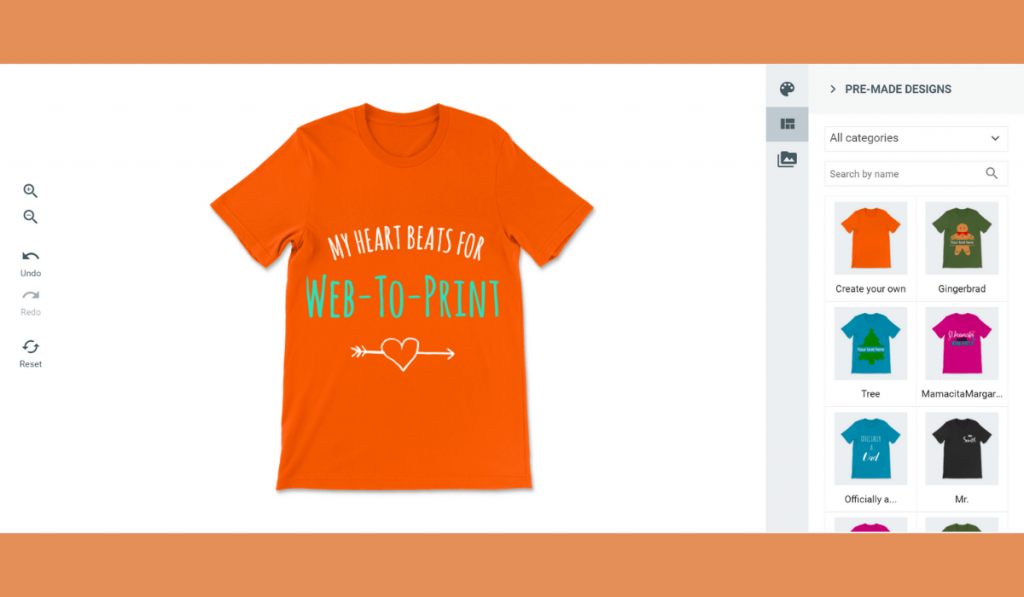
A Guide to Understanding Web to Print & Visual Customization

In this post, we’ll introduce you to web-to-print technology and visual customization. We’ll also explain how these technologies work and their benefits to your business.  The explosive expansion of the internet has massively contributed to the growth of e-commerce as a retail platform for many goods and services worldwide.  Online shopping has risen dramatically, given that consumers can shop 24/7 and access a wide variety of goods and services while enjoying shopping in the comfort of their homes.  So far, 69% of Americans have shopped online, and e-commerce’s share of total retail sales is projected to rise from 22.1% in 2022 to 23.4% in 2023.  That said, it isn’t surprising to see all kinds of printing orders being customized and ordered through a web-to-print solution. This technology has become the center of attention for e-commerce store owners looking to differentiate their products and reach a wider audience.  But what exactly is web-to-print, and why do you need it? What’s Web to Print? In its most basic form, web-to-print is a technology for commercial digital printing.  Also known as Web2Print, W2P, or Print e-commerce, web-to-print is a service that offers printing products and services online through e-commerce storefronts. This technology provides high-quality print-ready data for your e-commerce print service and ensures high volume print and brand consistency in all print work.  Typically, these systems receive orders, provide live estimates, accept payments, and produce print-ready artworks. From customized apparel to commercial printing to promotional materials—a wide variety of products can be customized or designed and printed on demand with the help of this technology.  Today, the global web-to-print industry is valued at $24 billion and is projected to grow at a CAGR of 5% to reach $30.5 billion by 2030.  How Does It Work? Generally, web-to-print technology offers customers a web portal or platform to design, choose, or customize their goods and place orders.  Lastly, you fulfill the orders by printing at your print shop. For this to work, you’ll need robust W2P product design software that easily integrates into your e-commerce storefront.  The best web2print software features an intuitive design studio that enables customers to design any e-commerce merchandise in your store. It should also automate your workflow and send you high-quality printable output files for seamless print job operations.  Benefits of Web-to-Print Solutions Web2Print technology not only automates your workflows; it also brings a slew of benefits to your business. Companies integrating web to print software can enjoy many benefits associated with this print technology, including.  1. Brand Consistency Brand identity is critical to the success of any business.  One of the ways to develop a strong (and memorable) brand identity is through print materials such as logos, brochures, business cards, etc. Maintaining consistency in colors and fonts across all your print materials becomes easy with web-to-print software.  Consumers can prepare a set of editable templates with consistent brand elements, customizable based on need, ensuring brand consistency and quality prints.  2. Cost Savings Web-to-print provides clients with the opportunity to order on demand.  Customers can choose from available designs or create new ones, easily order online, and specify the delivery time. This means that it frees you from maintaining inventory.  Additionally, W2P technology saves you on spending hiring designers because it provides product-self customization, and the entire process can be done online. Even customers with no design skills can easily customize ready-to-print templates and place orders.  For example, if a customer wants to update a business card logo, all they have to do is modify the template to include the changes and place a new order.  3. Fast Delivery The traditional print workflow is notoriously slow and time-consuming. In contrast, web-to-print is fast and requires only a few steps.  By eliminating some of the usual steps in the ordering process, you can also reduce the overall cost of printing. Clients only need to select a template, fill in their details, and download a printout instantly. Creating a pre-approved print on demand eliminates the usual approval process, significantly reducing the turnaround time.  4. Order from Anywhere The web-to-print interface allows customers to place orders any time they want and from anywhere. All a customer needs are log-in details and access to a browser.  This means you’re not restricted to one location and can place orders anywhere. A web-to-print solution is also convenient because more than one person can place orders should the other be occupied or out of the office.  5. Print More Orders Instantly With Web2Print, you can print a high volume of orders within a short period as compared to traditional printing.  Your sales team can accept orders online on behalf of your customers. Also, customers can place their orders via smartphones or desktops at any time of the day or night. This way, your storefront can process a high print volume since the process is automated. Visual Commerce: The Perfect Solution for Web-to-Print Businesses And offering W2P services isn’t enough. You need to provide a smooth and satisfying experience to the customer to encourage them to return. One way to achieve that is through 3D visualization and product customizations.  The trick is to invest in a robust product customizer for web-to-print to automate your printing business, which allows your customers to personalize your products.  A visual product customizer is a software application that enables customers to customize products directly within your e-commerce storefront. You can improve the process with augmented reality (AR) and 3D visualization solutions. These technologies let customers interact with a product and check out every detail before purchase.  Why Is Visual Customization Important? Visual customization brings many advantages to your business, including: Whether your business stocks or dropships, a visual product customizer can help it reduce costs as the products can simply be configured through a web-to-print service. But product customizers aren’t created equal.  For a product customizer to deliver a quintessential customer experience, it should possess at least one or all of these features. Sell More and Print Easier with Zakeke The success

Read More >

5 Things to get Started on the Web to Print Business

1. Do you want to target the B2B or B2C market?  Define your target customer so you can pick the correct tool. You need to decide what your end goal is before you start shopping for a solution. Determine what your targeted end customer is and then work backwards into a solution. There is a tremendous difference between the B2B and B2C markets as they have completely different needs and to be able to serve a segment well you need a solution dedicated to that segment. 2. Are you willing to offer more than print materials? The core question is, are you willing to expand the products and services you offer to be able to provide a complete marketing solution to your end customers? This still applies for both B2C and B2B market segments. This also includes services outside of products, such as kitting and assembly, inventory forecasting, guidance on best production methods based on usage and more. Customers are looking to find easy solutions to their problems. Finding partners that can ease steps along the entire marketing chain can work to distinguish yourself from other vendors.  3. How are you going to get your customers to the platform? While you are evaluating your options and the various solutions in the market, you should have a parallel process running to get customers to your selected platform. If you are going after the B2C market – Do you have a strong SEO strategy and practice? How are you going to drive traffic to the site? Are you going to run ad campaigns? If you are going after the B2B market – Which clients are you going to approach? What is your niche or your approach? You must have a plan on how to make your implementation of a platform successful. What are your metrics for success?  4. What happens when the orders start coming in? Once you have selected your platform and you are getting the orders flowing in then what do you do? If you are having to run operations with manual processes you are heading towards long days and missed deadlines. Whichever platform you choose be sure to run a handful of full cycle tests. Not only test the ordering process that your customers will experience, but also push those orders all the way through to final shipment. Is your overall system integrated from start to finish? If your customers are ordering things that are procured outside your company how does that flow work? Be prepared to handle the orders quickly.  5. Have you identified your internal leader and team? Selecting the right person on your team to ensure the project is successful is a key to success. This person should be held responsible for results and should be measured on set milestones and deadlines. If you successfully go through these five steps you are well on your way to a successful web to print implementation and business. Zakeke is well integrated with nearly all platforms and our knowledgeable team can assist you with selecting and vetting the elements of your ecosystem.

Read More >
print on demand and customization
Printing

The Benefits of Print-on-Demand & Live Customization

Through visual customization and granular personalization, print-on-demand is changing the e-commerce industry. Gone are the days when you had to print in bulk and hope for customers to like the mass-produced range. Now you can use POD integration and dropshipping to create need-based products that will have greater chances of success.  What is print-on-demand?  Print-on-demand uses digital printing technologies to print materials as per demand. This disrupts the old model of printing the same design in bulk and waiting for customers to choose from a limited and impersonal range. With customizable products, now organizations can start the printing process once customers initiate the action. Live customization isn’t the only reason companies should be interested in print-on-demand. E-commerce firms and other organizations can also use dropshipping services with print-on-demand to deliver products to customers. Printful, Invition, and CustomCat are only some of the organizations that are flourishing due to the following advantages of using visual customization through print-on-demand. The advantages of print-on-demand and live customization Less inventory If you print in bulk, you need adequate storage space. If yours is an e-commerce business, this means you have to find extra space or rent a warehouse. Both these options are expensive recurring charges.  With print-on-demand, you won’t be stocking unnecessary inventory. You’ll only start production once the customer has ordered from you. You would only need to store minimal stock that wouldn’t take up much space.  Cost savings In the conventional method, you have to invest significantly in production and printing. This is without knowing how much of it would be sold. With print-on-demand through print-ready files, you save on these up-front costs. If you can’t know the demand for the product, it’s a better option to wait for the market to decide.  Or, if there is demonstrable demand, your production can scale effortlessly using print-ready files. Again, if you get a lukewarm response, you won’t lose anything in investments. You would also save money on shipment if you’re transporting it to the warehouse.  Customization in batches Printing in batches gives you the freedom to customize your product based on the demand. You can create relevant visual elements and text that will appeal to your target audience. This will allow for granular personalization and therefore, increased demand.  Such visual customization through print-ready files will also give you an opportunity to upsell or sell more frequently to your audience. Since the message is focused and relevant for them, they will be more inclined to consider your product. Eco-friendly option With little wastage, print-on-demand is a superior environment-friendly option for companies. You will only be printing as and when needed. You don’t have to worry about excess supplies or finished products with no demand and no way to get rid of them. Beyond the products, ingredients, and packaging materials that otherwise would be wasted, customizable products also minimize your marketing efforts. This leads to less wastage of marketing materials.  Easier management You don’t have to hire additional staff to keep track of your inventory. As a result, you also won’t need complex systems to manage your stocks or negotiate with your suppliers. POD will make it easier for you to manage your company.  You also don’t have to hire additional staff members in marketing since you only have to start the process when the demand comes in.  In short When you integrate print-on-demand and visual customization, you’ll be able to cut costs, avoid manual customization, reduce management, and implement automation that will help your business scale, fast.  

Read More >
Web2print-customizer-min
Industry Trends

Visual Product Customizer: the perfect tool for Web-to-Print Business

When it comes to product customization, it is impossible not to think of the web-to-print world. The merging of classic and digital printing is no longer an option. It is a solution that print service providers just have to offer. Today, not maintaining web-to-print means being outside the logic of the market. It is not enough just to offer a web printing service. You need to offer a smooth and satisfying experience to the customer that encourages him to come back. The advantages of web-to-print Web2Print offers a wide range of benefits for both you and your customer. It is a win-to-win operation. The main advantages are: Cost savings: the online printing process reduces the cost of order processing and customers naturally expect part of this savings to be passed on to them, and this actually happens; Service efficiency: the customer can order 24/7 on your online store and receive the product directly at home. This means that you can reach more potential clients; Sales increase: the creation of an online showcase allows you to show your large catalog quickly and intuitively, making it easier for the customer to search for the product; Cash flow improvement thanks to online payment options; Automation: a web-to-print solution with a good product customizer automates ordering, payment and accounting processes; Customer loyalty: if a customer uses your ecommerce site for typography and is satisfied with it, they will most likely return to using it. After all, why should it change? Therefore, you have the opportunity to guarantee the customer a longer-term commitment and to sell more and more products over time. Choosing the perfect Visual Product Customizer Let’s define what a Visual Product Customizer is. It is a software application that allows customers to customize the products directly on your online store. The experience can be enhanced by 3D and AR technology to let customers interact with the product and investigate every details before purchase. Visual Product Customizer has advantages in terms of conversion rate, customer engagement, cost-effectiveness and return rate. That’s why it enhances customer experience and helps your business reduces costs if your business stocks – or dropships – generic items that can be simply configured through a print on demand service. You can find a lot of software solutions but it is important to choose the right partner to avoid wasting time and money, but also losing customers. A Visual Product Customizer can be a tremendous experience if not accompanied by speed and ease of use. In addition to these, the features that can just make the experience wonderful are: Unlimited configuration options: this is a must. That it to say you have to be able to sell as many products as you want and to set multiple colors, sizes and style of the same product. You must be able to define rules and restrictions for each design and to set complex pricing rules and show different prices based on quantity, setup costs, number of colors, and personalization areas; Flexible printing methods: you have to be able to set unlimited printing methods for one or more products, sides and variants. You can define settings for your print-ready files that can be used for engraving, embroidery, and personalization methods other than printing; Print-on-Demand & Dropshipping Service Integration: a good Visual Product Customizer must support your POD & Sdropshipping services; 3D Preview & AR: these technologies let customers make informed purchase by interacting with the products and visualizing how they really look. How to integrate Visual Product Customizer into your online store? As we said, you can find a lot of software solutions but you should be sure that they have all the features you need. You can enjoy Demo Store to see how a Visual Product Customizer works. Whether you are a small company or a large company, Zakeke has the solution for you and unlike other software products, it is applicable both online and in a physical store. First steps to integrate Zakeke Visual Product Customizer Take a look at the DEMO STORE showing off Zakeke in action Start the 14-day FREE Trial NOW Schedule a call with one of our Visual Customization experts

Read More >