

Statistics show that 67% of consumers claim that high-resolution visuals drive more views and conversions than text-based descriptions. 56% of marketers use visuals in 100% of their published work. Moreover, shoppers who watch videos are 1.8x more likely to buy than those who only read text-based descriptions.
What do these stats tell us about e-commerce?
We are in an age of visual commerce, and businesses need to embrace this trend in order to achieve a competitive edge.
Up until recently, a good shopping experience was typically reserved for brick-and-mortar stores. Today, things are changing. With the evolution of mobile technology and a tsunami of visual applications that allow for shopping right within the app, the retail apocalypse is here.
Forward-thinking retailers are embracing visual commerce to remain competitive and relevant in an industry that’s rapidly changing.
But what exactly is visual commerce, and why should you care?
In this guide, we’ll delve into the crux of visual commerce and explain why you should use it for your e-commerce business. We’ll also explore the various types of visual commerce and the trends that are making waves in the visual commerce space. Let’s dive in!
What Is Visual Commerce?
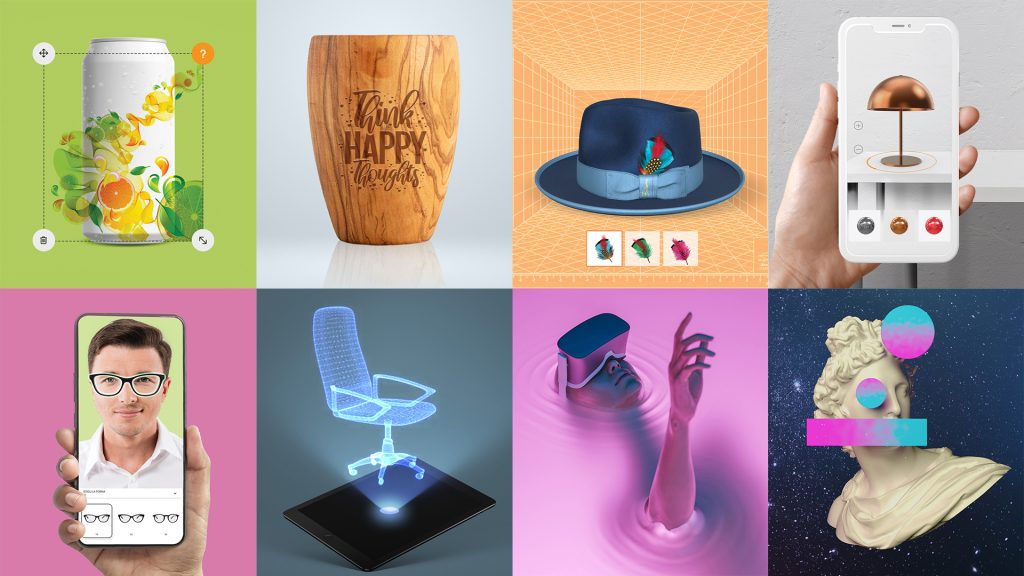
Visual commerce is the concept of leveraging visual content and augmented reality to attract, engage, and influence customers.
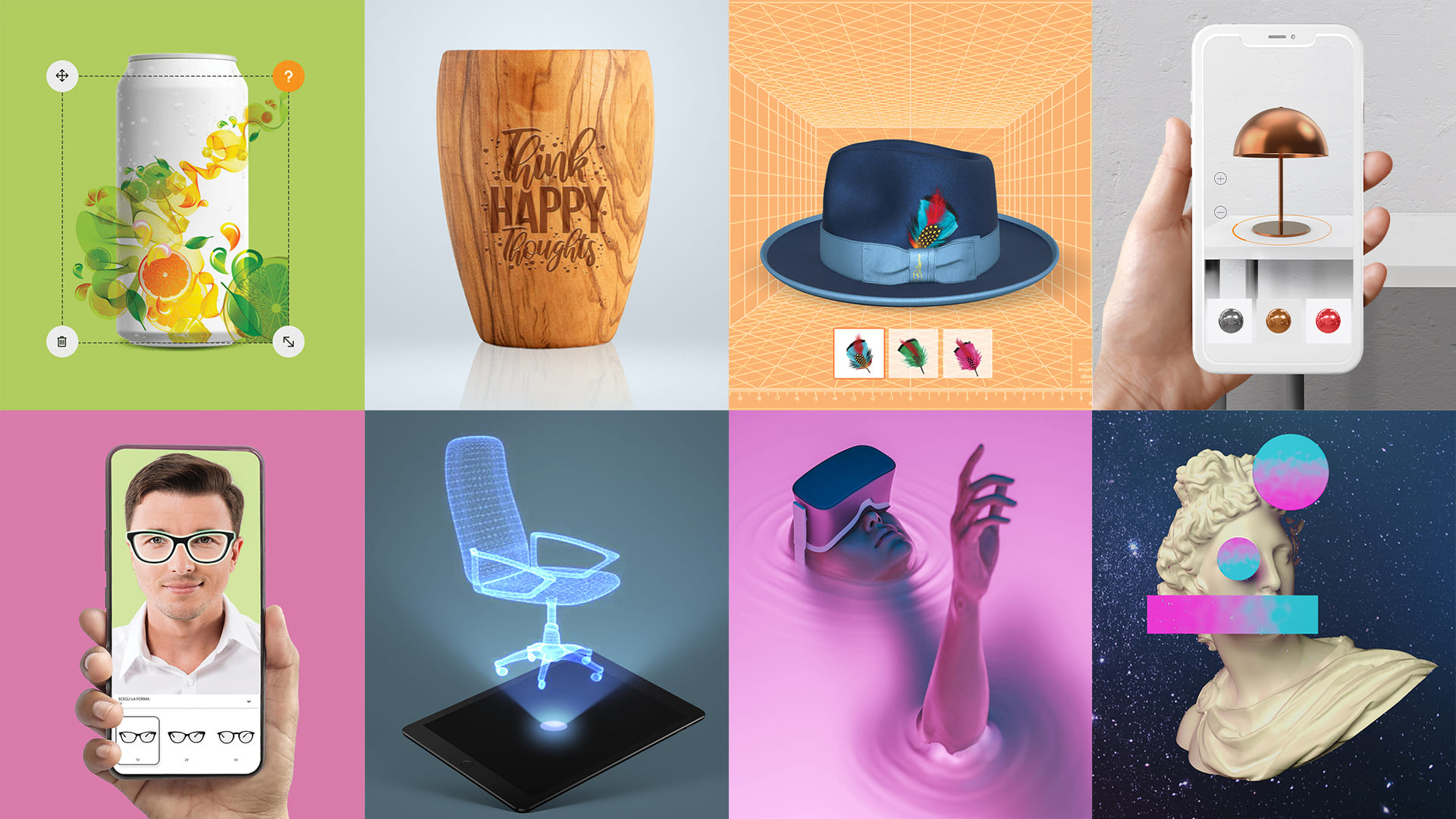
In its most basic form, visual commerce is the concept of enriching customer experience with powerful visual content that empowers shoppers to engage, convert, and become loyal to a brand. Visual commerce is an umbrella term that includes, but not limited to:
- Highlighting visuals of your product (using videos, 360-degree photos, up-close shots, etc.) on your store—not just on the landing pages
- Collecting user-generated content (UGC) from various social media platforms and repurposing it into your visual marketing materials
- Creating shoppability layers to visual content on your site
- Creating searchable visual content with optimized descriptions and relevant tags to help users search and quickly locate the content
- Repurposing visual content for your social media sites to streamline the shopping experience
Essentially, visual commerce aims to drive conversions and engagement using compelling photos and videos.
It aims to take the “normal” visuals that people use on social media and other sites to the next level. Instead of just having a plain 2D photo, you have a high-resolution product image, plus a super-engaging video, and maybe even a virtual try-on feature.
This is often achieved through the use of specialized tools, such as 3D product configurators and augmented reality applications. The beauty of visual commerce is that it compels customers to interact with the product and be brand loyal.
Types of Visual Commerce
Visual commerce helps to improve product discoverability. This has a positive impact on conversions and sales. There are different types of visual commerce you could use to achieve this goal, which we’ll discuss in this section.
1. Visual Configurators
Customers love the flexibility to choose between various product designs and parameters. Every customer has unique needs, and with options, they get to find exactly what they want.
When customers are allowed to customize their products, they become more interested in your business. And this is where visual configurators come in!
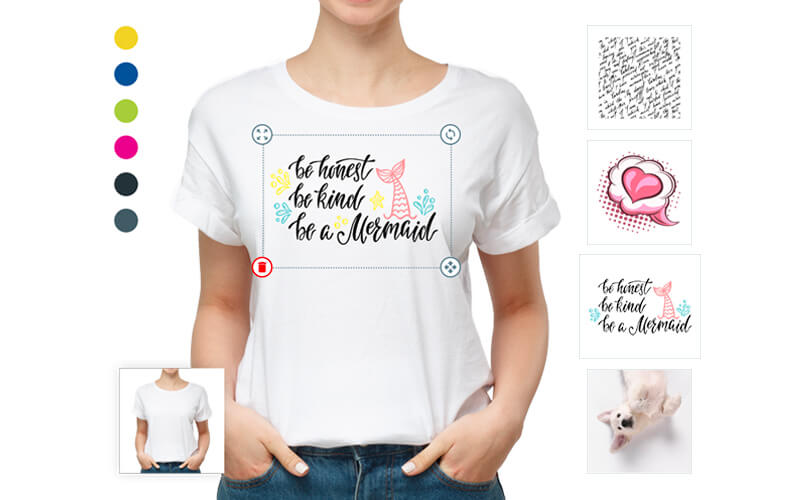
These online tools allow shoppers to customize and visualize products to their specifications. With a visual configurator, customers can create their desired product—change the design, shape, material, characteristics, etc., and have a 360-degree view of the product. This allows the customer to get involved in the design process.
In other words, a visual configurator is a tool that allows users to customize the features and components of a product so that the final product meets the expectations as much as possible.
As products become more complex and the need for personalization increases, product customizations have become a handy tool for shoppers and manufacturers.
2. Configurable Augmented Reality for E-Commerce
Augmented reality (AR) is the next big thing in e-commerce. This technology allows shoppers to preview products or experience services in their own environment and on their own time before committing to buy.
In other words, AR allows customers to see and experience the product as if they were in a physical store. It allows users to see virtual 3D versions in the real world.
Using AR, shoppers can virtually try on and test products through an electronic device. This helps them understand what they are buying and how those items will work for them.
3. Virtual Photography
Virtual photography is the practice of producing photorealistic, computer-generated images.
A virtual photograph is a highly-realistic 2D computer-generated image. If done properly, and with the right tools, the final result is indistinguishable from a photo taken with a traditional camera in a studio.
Creating virtual photographs requires utilizing product sketches, photos, and even existing CAD files. Depending on how many files there are and their size, creators will likely need to clean up the device storage regularly. The creator can add texture, colors, and shadow with these components to create a photorealistic image. Creators can then create a 3D experience, allowing customers to view the product in all styles, colors, and angles without leaving their homes. The goal isn’t just to save on costs but to show the product features in a way that evokes emotions.Virtual photography helps to showcase the product in all its glory. Hence, the produced photos also work great when used in marketing videos.
4. Visual Search
Visual search leverages AI to help users search your website through the use of real-world imagery rather than text.
AI-powered image recognition technology interprets the image’s content and returns relevant results. There are many things you can do to optimize your images for search, including making descriptive filenames and adding alternative texts.
5. Digital Lookbooks
Lookbooks and digital catalogs are mainly used for lifestyle items.
A lookbook is a collection of photos compiled to show off a model, style, or clothing line. Usually, marketers take fashionable photos of models for a particular look or season.
This gives viewers ideas of how to style outfits or insights into the trending styles for a given month. The focus of digital lookbooks isn’t on the product but on the results—like a final look after donning certain attire or applying make-up.
How e-Commerce Stores Use Visual Commerce
Jeff Bullas, a renowned digital entrepreneur and blogger, says that content with visuals drives 94% more views than content without them. With that in mind, an increasing number of marketers are using visuals to spice up their content and drive engagement.
But how can an e-commerce store use visual commerce to grow sales?
There are many ways to make visual commerce drive online sales. Key strategies leading e-commerce brands use include.
Put Visual Content on Landing Pages
One of the best ways to create a seamless shopping experience for shoppers is to provide information where they need it: on the product pages.
Forward-thinking marketers go beyond 2D product shots and text descriptions.
They combine product photos with compelling demo videos, ratings, and reviews to provide shoppers with a comprehensive review of the product. Pairing high-resolution CGC imagery with reviews can further add context to the product, giving consumers more confidence when making a purchase decision.
Leverage User Generated Content
creating a gallery of customer pictures and videos can be an excellent tactic, particularly in the discovery phase. The thing with UGC is that it establishes trust between the customer and the brand. It’s real and honest content that potential customers can trust, as it’s based on the experiences other users have had with your products.
And the best part?
It’s a cost-effective strategy for creating brand awareness. Customers create content for your brand. You’re not under any obligation to pay them, and a single content share can reach thousands of users.
Utilize AR to Improve Shopping Experience
Augmented reality has transformed e-commerce in unprecedented ways.
This new technology allows shoppers to experience the product as if they were in a physical retail store. AR bridges the gap felt by customers between brick-and-mortar stores and the online shopping experience.
With augmented reality, shoppers can try the products before buying them. Though people are increasingly getting familiar with online shopping, there are products that consumers want to try out physically, like furniture.
Shoppers can now visualize how the furniture will look in their homes through AR technology. They can feel the texture, measure the dimensions, and do much more. This not only reduces the return rates but also helps build a long-lasting relationship.

Visual Commerce Trends
E-commerce product visuals have quickly become the most powerful marketing assets brands can have. If utilized properly, visual commerce can increase conversions and create massive brand awareness across channels. To achieve this, you’ll need to stay abreast of the top visual trends in your industry. Here are the top visual ecommerce trends to watch out for.
1. Shoppable Images and Videos
Visually compelling content has been proven to attract and inspire consumers. But to compel them to buy, you’ll need to do more than just create killer visuals. You’ll need to make your photos and images shoppable!
Shoppable images and videos go a long way to convert consumers because they bring the ‘shopping’ element to these consumers.
Shoppable content allows users to click the content they like (image, video, gifs, etc.) when browsing social media, directing them straight to the landing page.
Automatically redirecting the shopper to the product page shortens the sales cycle while removing the pain shoppers go through while navigating product pages and looking for the items they want.
Simplifying this process grabs the customer’s interest when they still have the product in mind, leading to quick decision-making and increased conversions. This is not just a theory. Studies show that 77% of consumers find shoppable sites easier to navigate.
2. Digital Catalogs
A digital catalog or e-catalog is an online document that showcases the products or services a brand offers. This document can be accessed as a direct link and is easy to navigate around.
A digital catalog typically includes high-quality photos, videos, pop-up graphical images, and descriptions. Creating a digital catalog is an effective way to boost conversions. Studies show that 93% of shoppers consider visual aspects when making a buying decision.
So, if you want to outshine your competitors in e-commerce, you’ll need to go all digital with e-catalogs. The thing with e-catalogs is that companies can showcase their offerings tastefully. Digital catalogs also allow brands to use product imagery in real-life settings, allowing consumers to visualize how the product will look in specific environments.
MoMA Design Store is one of the top brands leveraging e-catalogs in their marketing. The company includes a direct link to the product page in the catalog, helping shoppers learn more about the product and add the item to their carts.
3. 3D Product Visuals
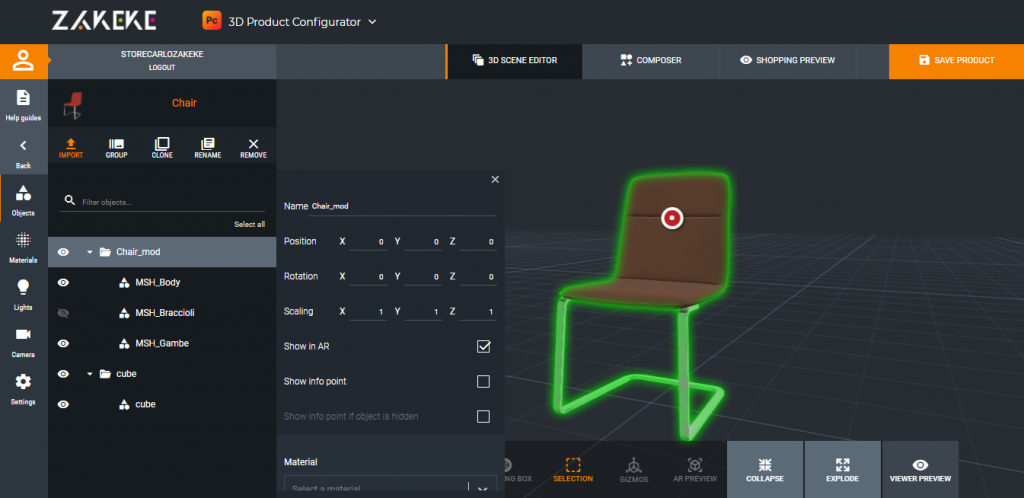
The concept of 3D in e-commerce isn’t new, but its adoption has grown rapidly over the past few years. Those 3D visuals are designs made either digitally or physically that make up a three-dimensional art piece. An interactive 3D product visual is engaging, trustworthy, and persuasive.
3D product visuals allow customers to interact with products from all angles. Shoppers can tilt, zoom, rotate, and even have a 360-degree view of the product.
Research has shown that the more a shopper can interact with a product (e.g., by rotating or zooming), the more they’ll trust the vendor. And consumers who can see a product in 3D are 11x more likely to buy than those who don’t.
In 2022 and beyond, we can expect more and more companies to adopt 3D assets of their products’ visual inventory as consumers continue to favor brands that are highly visual.
4. User-Generated Content (UGC)
User-generated content is a crucial component for driving e-commerce sales. Successful brands use it all the time to drive engagement and create brand awareness, which ultimately leads to an increase in sales.
UGC includes any content posted by users on online social media platforms, including homemade product videos, customer reviews, testimonials, and product photos.
User-generated content will never grow out of fashion owing to the many benefits it brings. Besides being a cost-effective strategy to create engagement, UGC serves as social proof, lending credit to a product and brand.
Consumers also prefer content posted by other customers who have used the product to a brand’s own advertisement.
5. Augmented Reality (AR) and Virtual Reality (VR)
AR and VR technologies are ramping up to be the game-changing technology for e-commerce. These technologies bring the in-store experience online by allowing consumers to interact with the products in a virtual environment.
In e-commerce, AR and VR technologies are being used by brands to improve customer experience by bringing the in-store experience to life in an online format. Here are the various ways AR/VR is transforming the e-commerce landscape.
- AR-based navigation in retail stores
- Virtually trying out furniture
- Virtual make-up styling
- Virtually try-on products before purchasing them
- AR/VR games for consumer engagement
- Interactive product demos
Today, many leading brands, including Apple and IKEA, are using AR in all their stores. These companies have witnessed a massive improvement in customer engagement and brand advocacy owing to the interactive nature of these technologies.

6. Personalization
An abundance of supply has caused modern customers to become pickier by the day. With consumers becoming choosy by the day, personalization has proven an effective strategy for brands looking to improve advocacy.
Brands are leveraging sophisticated technologies, like 3D product configurators, to improve customization and product personalization.
Personalization has taken center stage as brands increasingly gravitate towards this trend.
Leading brands, like Netflix and Amazon, are reaping the benefit of personalization in terms of cost savings and improved customer satisfaction. Netflix, for instance, saves a staggering $1 billion a year through its recommendation engine.
In e-commerce, brands are also increasingly implementing cutting-edge technologies, like AR and VR, to make it easier to personalize content.
Think of presenting the right visuals to the right customer at the right time to capture customer attention. That’s what savvy e-commerce brands are doing. Most brands, including Amazon, personalize content based on specific customer information like location, demographics, currency, etc.
Adding catchy, personalized visual content along with irresistible promotions will maximize online conversions.
Why Visual Commerce Is Important
There are many reasons why consumers gravitate toward visual commerce and here are just a few.
1. Drives Engagement and Purchases
People are, by nature, drawn to things that are virtually attractive.
Reason?
It’s easier for our brains to interpret images than text. It only takes 13 milliseconds for the human brain to process an image, which is roughly 60,000 times faster than text. So, if you’re trying to communicate important information to your audience or followers, an image is an excellent way to do so.
Plus, images also drive higher conversions than text.
Studies show that images generate 650% higher engagement than text, with an 87% interaction rate which is 4% higher than text-based descriptions.
And this engagement more than doubles for brands leveraging augmented reality. 71% of shoppers say they would shop more with brands that use AR and 61% say they would choose to shop with stores that leverage AR over those that don’t use it.
2. It Boost Product Discovery and Education
Visual content is helpful for awareness and education.
Content such as video tutorials is better at educating customers than text. In most cases, a customer would prefer to watch a product video than read a how-to guide article.
The reason?
Video tutorials are actionable! You get to see and watch someone performing a certain action or operating a system in real life. Videos allow you to get closer to products, giving deep insights into how they operate and how you’ll proceed once you’ve purchased the product.
In fact, studies have shown that 70% of buyers watch videos during the purchase process. Visuals provide context for the consumer while demonstrating how the product fits in their lifestyle, particularly where AR is involved.
3. Visuals Empower Buyers
Strong product visuals help buyers make confident and informed buying decisions.
For example, a great visual configurator will give the buyer a 360-degree view of the product, enabling them to make a more informed buying decision. Plus, consumers can try out different designs, styles, and colors to find the product specifications that best fit their needs.
The result?
Buyers will be able to try out products and only buy the products that fit their needs. This leads to more satisfaction and fewer returns.
4. Visual Commerce Enhances Personalization
The modern consumer expects brands to communicate with them using personalized messages. Visual commerce involves creating UGC in such ways that create personalized experiences based on customer preferences.
Customers are not only empowered to express themselves by sharing images and homemade videos, but they also receive visual content specifically tailored for them. Plus, through the use of AI, brands can identify the best UGC and one that generates the most shares and use it at all times.
5. Visual Commerce Is Budget-Friendly
Visual commerce doesn’t go hard on your pocket, especially when it comes to marketing your brand. In fact, UGC is considered one of the most cost-effective strategies brands can use to promote their products online.
Plus, visual commerce has been proven to increase sales.
By exhibiting visual content on their websites, companies have reported a 40% increase in sales. So, you grow sales without incurring high costs, particularly if you opt for a user-generated content strategy.
Wrapping Up
Visual commerce is the concept of leveraging visual content, customization, 3D, augmented reality and more visual solutions to attract, engage, and influence customers.
The idea behind visual commerce is to drive engagement and boost sales. If done properly, visual commerce can do more than just boost sales; it helps in discovery and education, empowers shoppers to buy with confidence, improves personalization—all without hurting your bottom line.
Want to get started with visual commerce?
Zakeke empowers brands and retailers to get ahead of the technology curve and offer their customers live personalization with AR and 3D view. Contact us today or book a demo to learn more about how our product works.
If you are wondering what you can do with Zakeke, check out our DEMO STORE.
Supported Platforms:
Stay up to date and follow us on LinkedIn, Facebook and Instagram